The Loire Valley functioned as the primary laboratory of the French Renaissance, where medieval defensive architecture gradually yielded to a courtly language defined by symmetry, light, and Italian-inspired ornament. Rather than a sudden rupture, this transformation unfolded incrementally, as kings and nobles experimented with new forms while retaining older structures. For travelers interested in architecture and art history, the châteaux of the Loire offer a uniquely legible, chronological record of how the French court adopted Renaissance ideals.
Château de Langeais
Rebuilt from 1465 under Louis XI on the site of an earlier stronghold, Langeais stands at the threshold between the Middle Ages and the Renaissance. Its town-facing façade remains overtly defensive, complete with a working drawbridge. In contrast, the courtyard elevation reveals a more residential ambition, with enlarged windows and restrained sculptural decoration that anticipate Renaissance priorities of light and comfort.
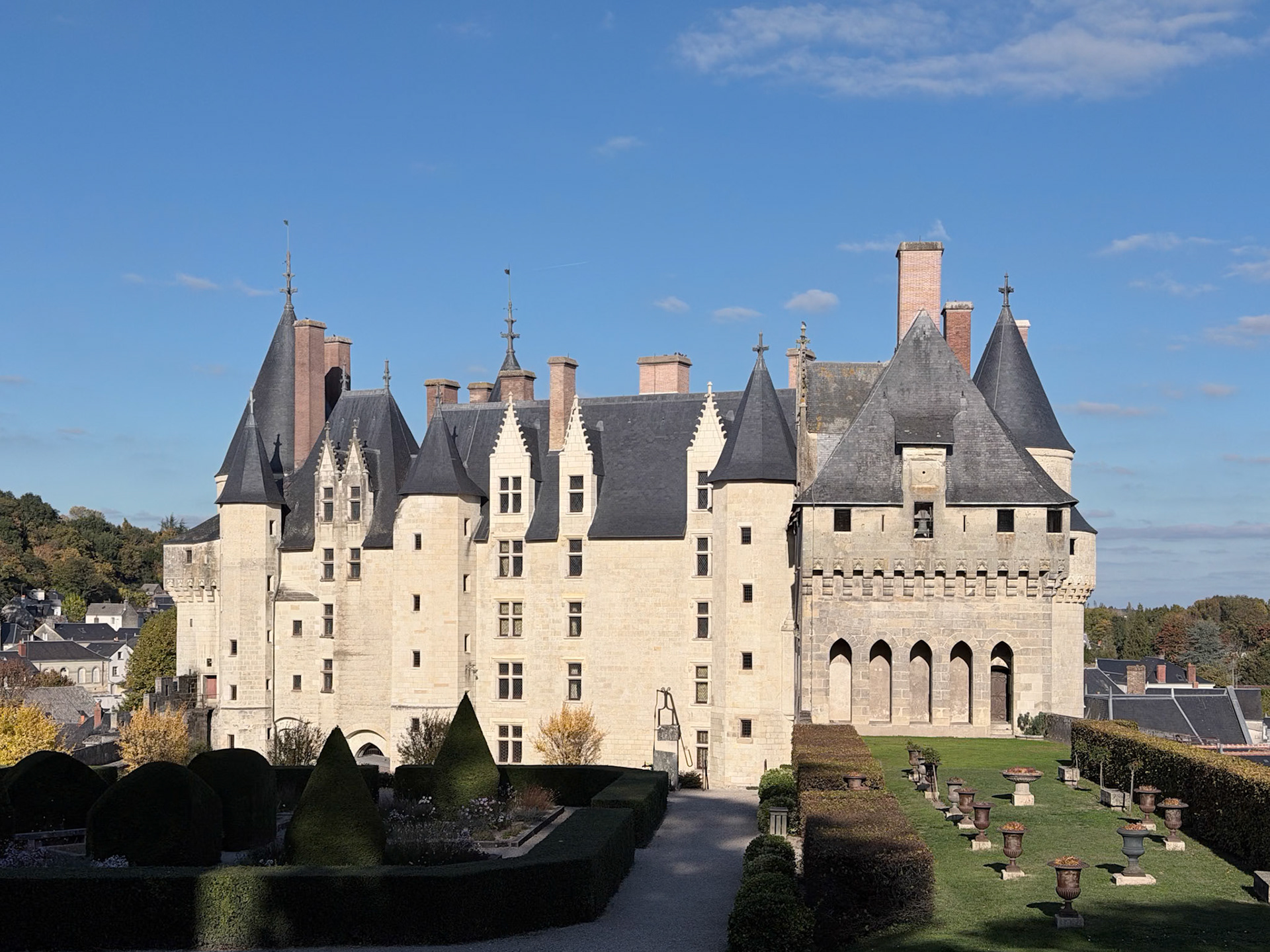
Château de Langeais
The interior is restored and furnished to evoke late 15th-century princely life. Historically, the château is best known as the site of the politically decisive marriage between Anne of Brittany and Charles VIII in 1491.
From Langeais’s fortified sobriety, the royal court’s architectural ambitions become more explicit at Amboise, where experimentation occurs on a far grander scale.
Château d’Amboise
Perched on a strategic promontory above the Loire, Amboise illustrates the transformation of a medieval fortress into a Renaissance palace under Charles VIII and Louis XII. Charles’s Italian campaigns proved decisive: returning artists, craftsmen, and ideas reshaped the château’s spatial logic and decorative vocabulary.
The Salle des États preserves late Gothic structural elements while introducing more regularized proportions associated with early Renaissance design.
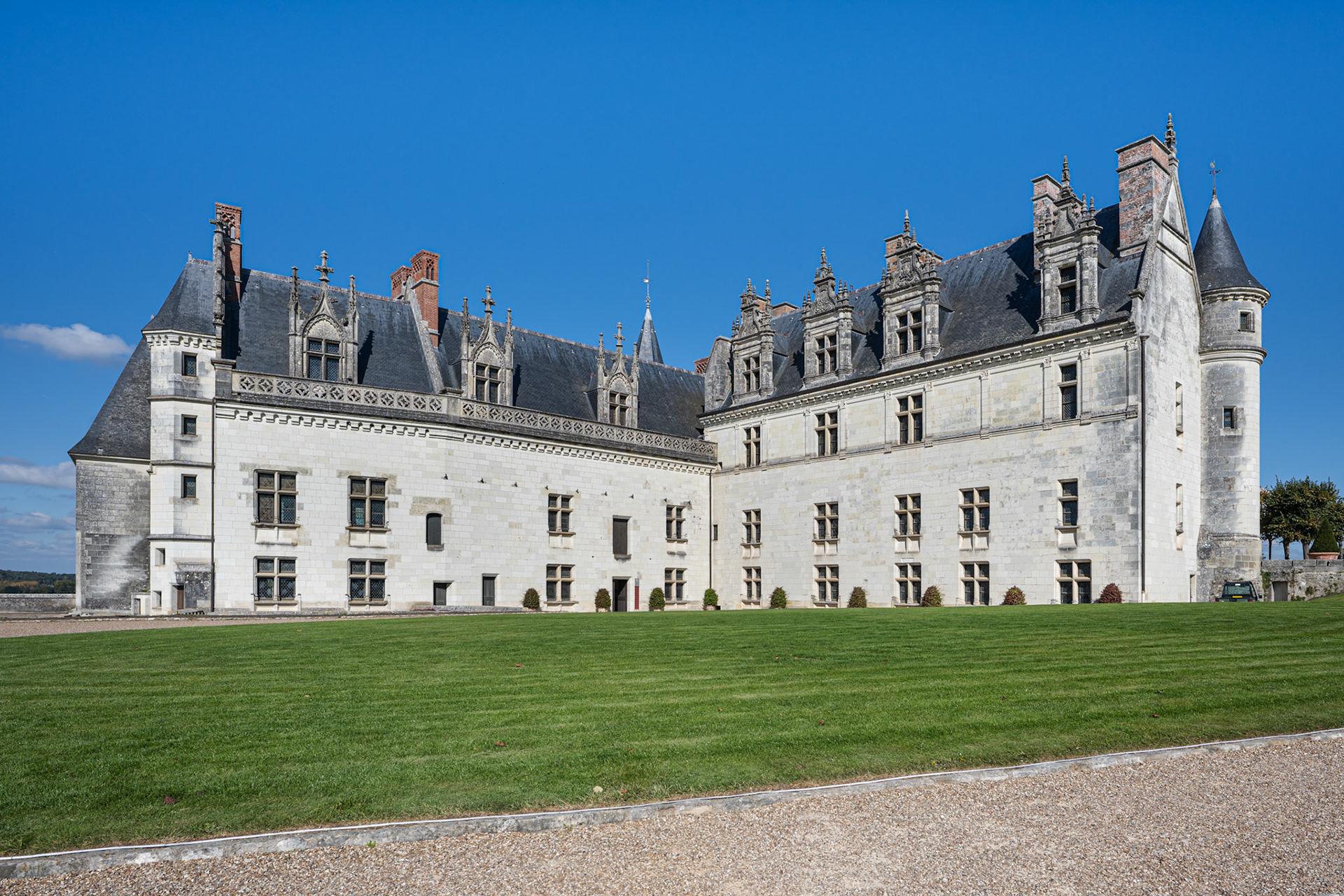
Château d’Amboise
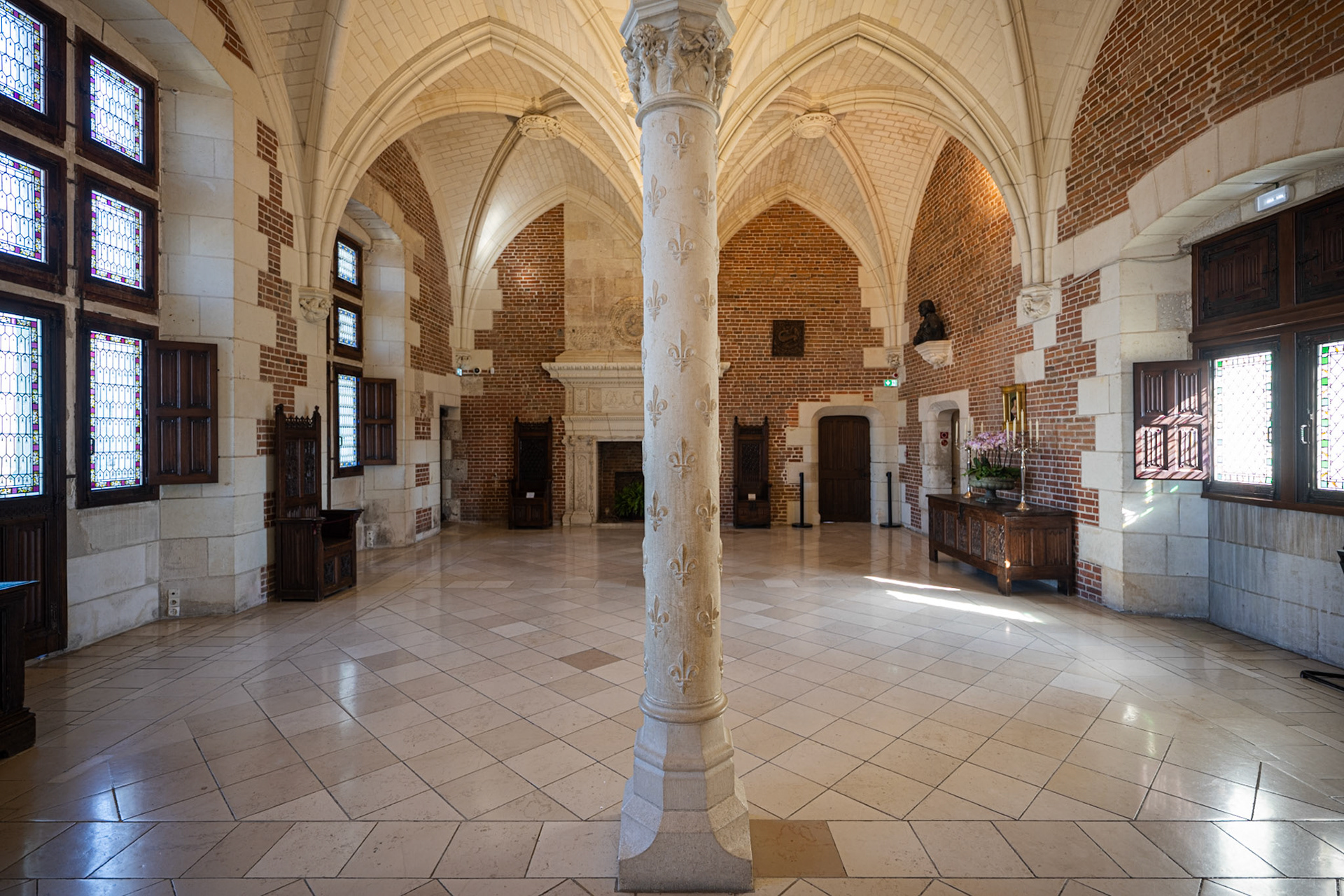
Salle des États
Nearby, the Chapel of Saint-Hubert (1491–1496) exemplifies Flamboyant Gothic with its lace-like stonework. The chapel is also traditionally identified as the burial place of Leonardo da Vinci, who spent his final years nearby at Clos Lucé under the patronage of François I.
This coexistence of Gothic structure and Renaissance aspiration intensifies further downstream, at a château that would later become synonymous with artistic experimentation.
Château de Chaumont-sur-Loire
Constructed between 1469 and 1510, Chaumont embodies the physical transition from a medieval fortress (seen in its massive round towers and west wing) to an early Renaissance residence.
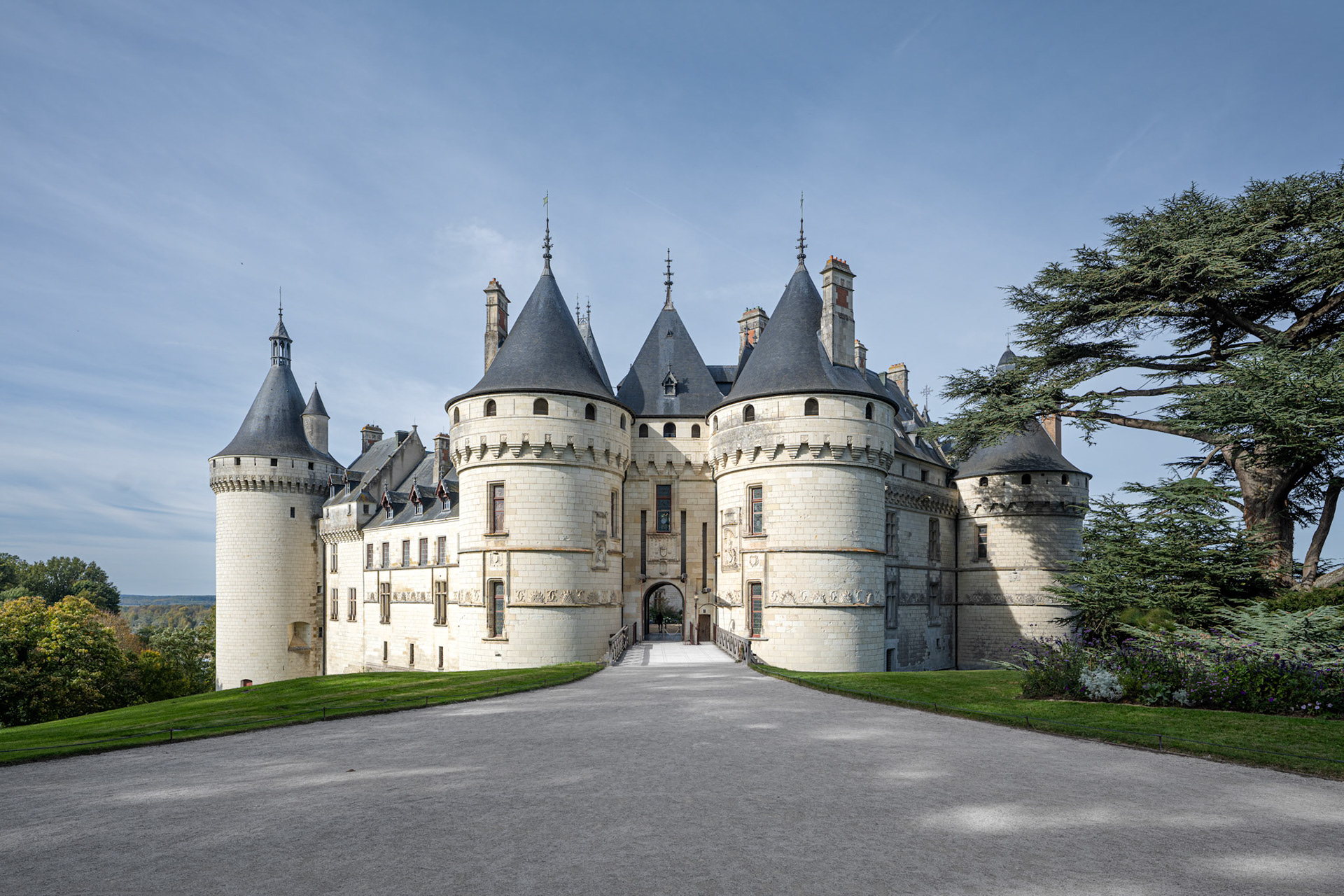
Château de Chaumont-sur-Loire
The château is famously associated with the rivalry between Catherine de Médicis and Diane de Poitiers, who exchanged Chaumont for Chenonceau in 1560.
Today, Chaumont’s identity as a “Castle of the Arts” continues through contemporary installations, including Pritzker-Prize winner Wang Shu’s Garden of Lingering Clouds, which reactivate Renaissance ideas of landscape as an extension of architecture.
Château de Blois
The Château de Blois is less a single monument than an architectural encyclopedia spanning four centuries. Its courtyard presents four distinct stylistic moments (Medieval, Gothic, Renaissance, and Classical) each corresponding to a different phase of royal occupation.
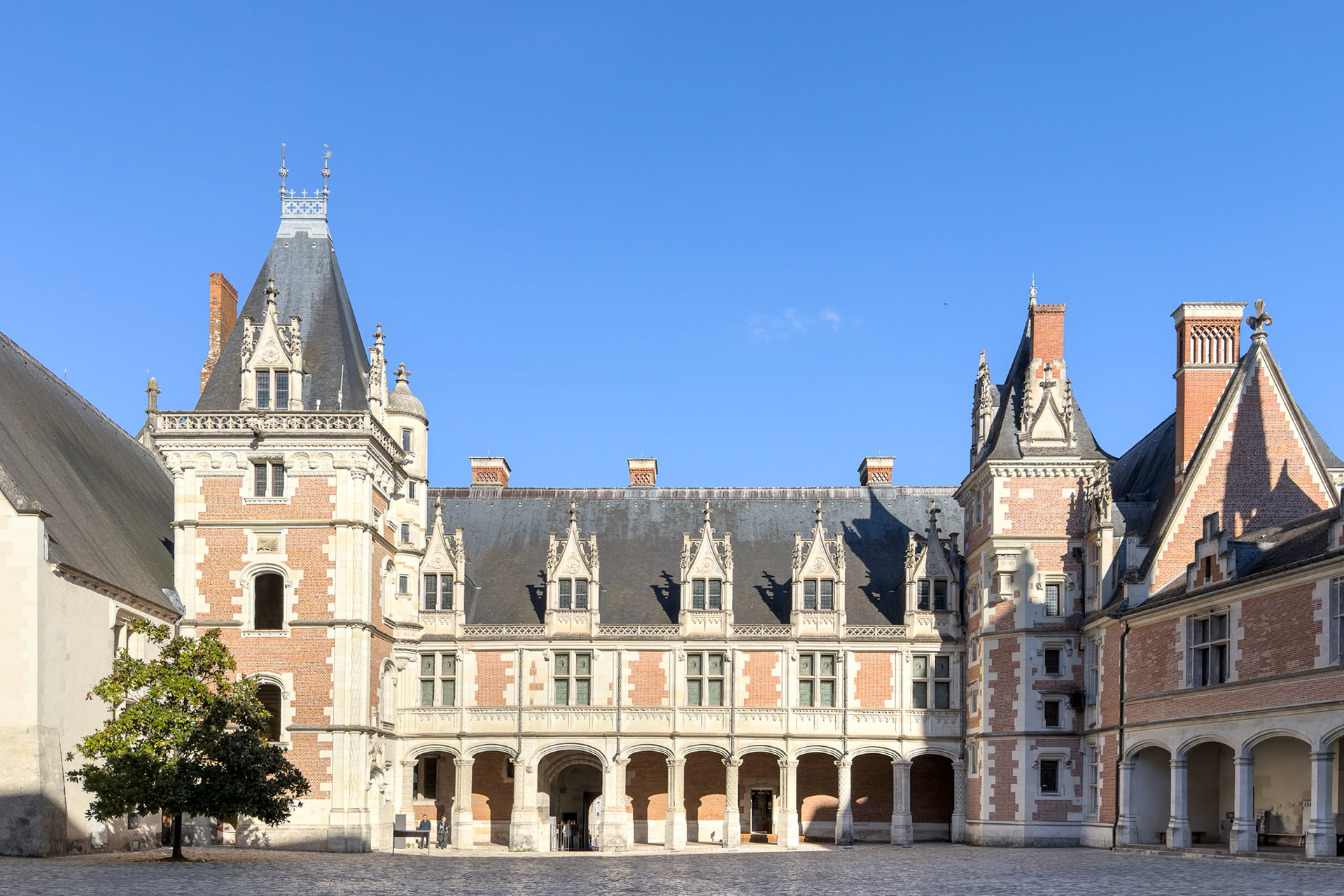
Château de Blois
The Louis XII Wing (1498–1503), built of brick and stone, represents the late Gothic tradition tempered by early Renaissance regularity. By contrast, the François Ier Wing introduces a confident High Renaissance vocabulary, most famously expressed in its monumental external spiral staircase — an openwork structure adorned with sculptural reliefs and the king’s salamander emblem, symbol of rebirth and royal authority.
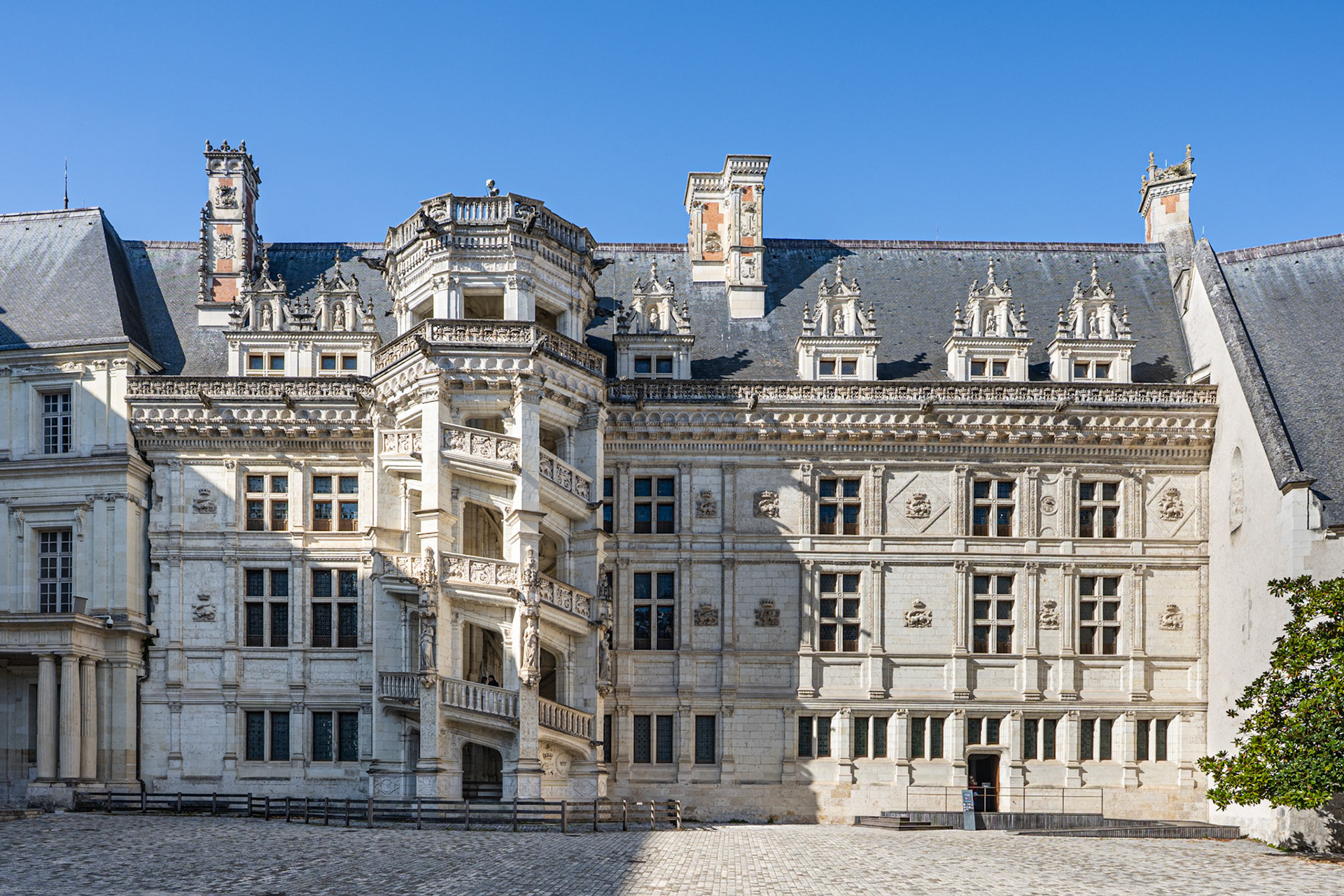
François Ier Wing with monumental external staircase
The architectural narrative concludes with the Gaston d’Orléans Wing, a 17th-century Classical project by François Mansart. Its strict symmetry and monumental scale signal the ideological shift toward absolutism that would later culminate at Versailles.
Nearby, the "Ladies' Château" pursued an altogether different architectural solution by spanning the water itself.
Château de Chenonceau
Built between 1515 and 1522, Chenonceau is among the most original achievements of the early French Renaissance. Spanning the River Cher, it replaces the traditional fortified enclosure with an elegant, linear composition. The retention of the 15th-century Tour des Marques serves as a reminder of feudal origins.
The arched bridge and later Grand Gallery, constructed under Catherine de Médicis by Jean Bullant, transform the château into a ceremonial promenade above water. While Philibert de l’Orme is sometimes associated with later modifications, the primary architectural language here reflects a synthesis of French structure and Italian proportion.
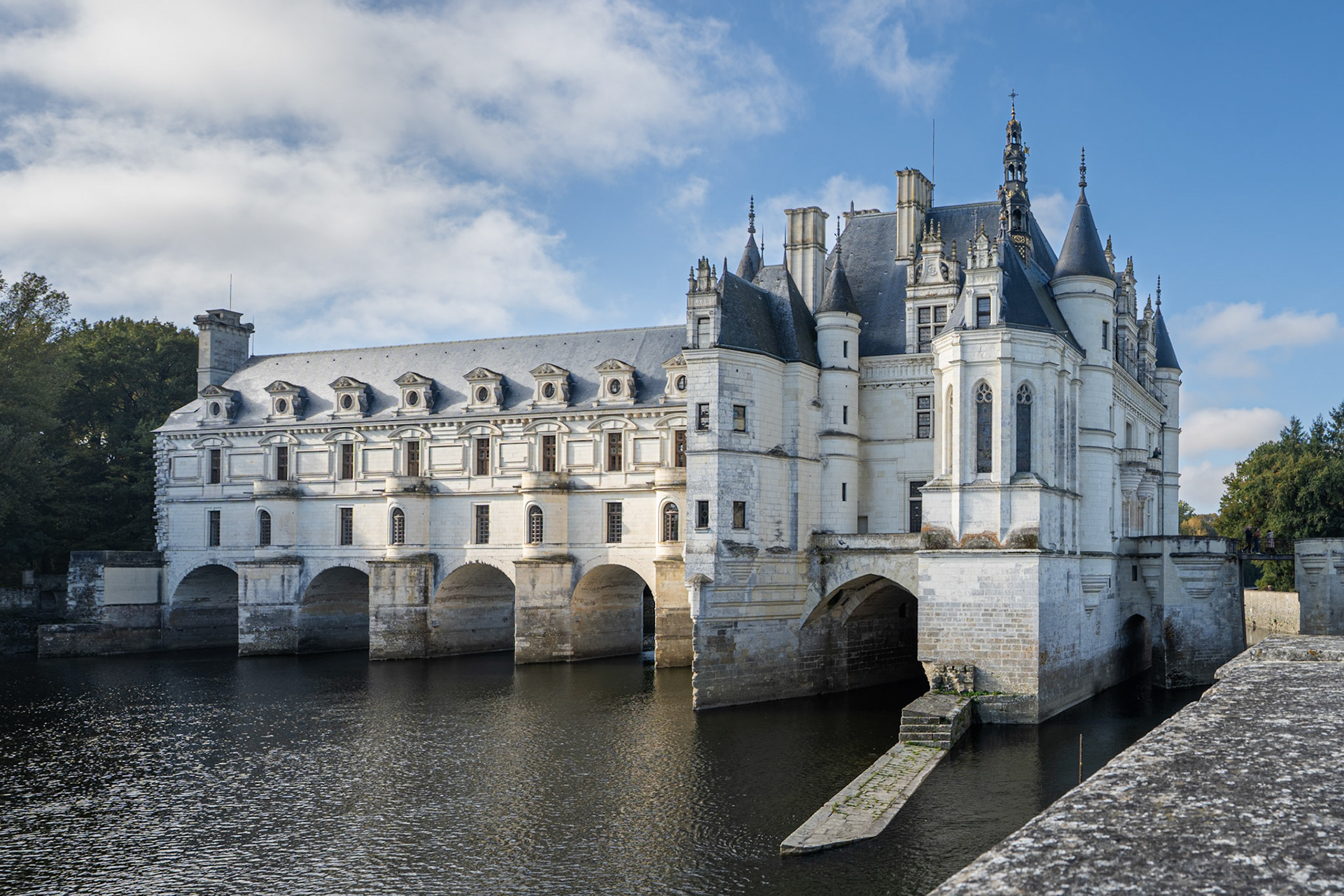
Château de Chenonceau
Inside, Chenonceau preserves early examples of Italian-inspired interiors, including coffered ceilings, underscoring the château’s role as a site of cultivated humanist patronage.
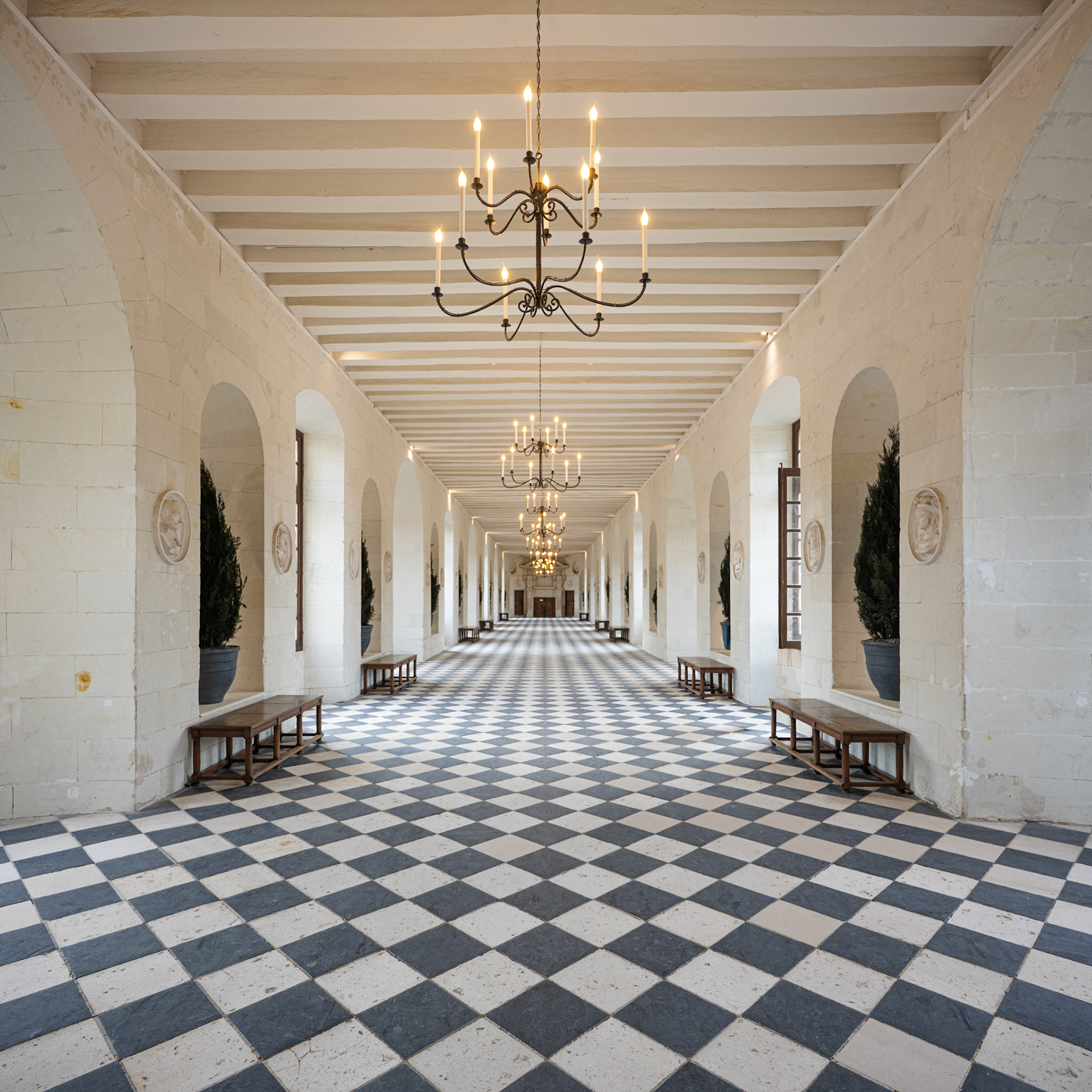
Grand Gallery
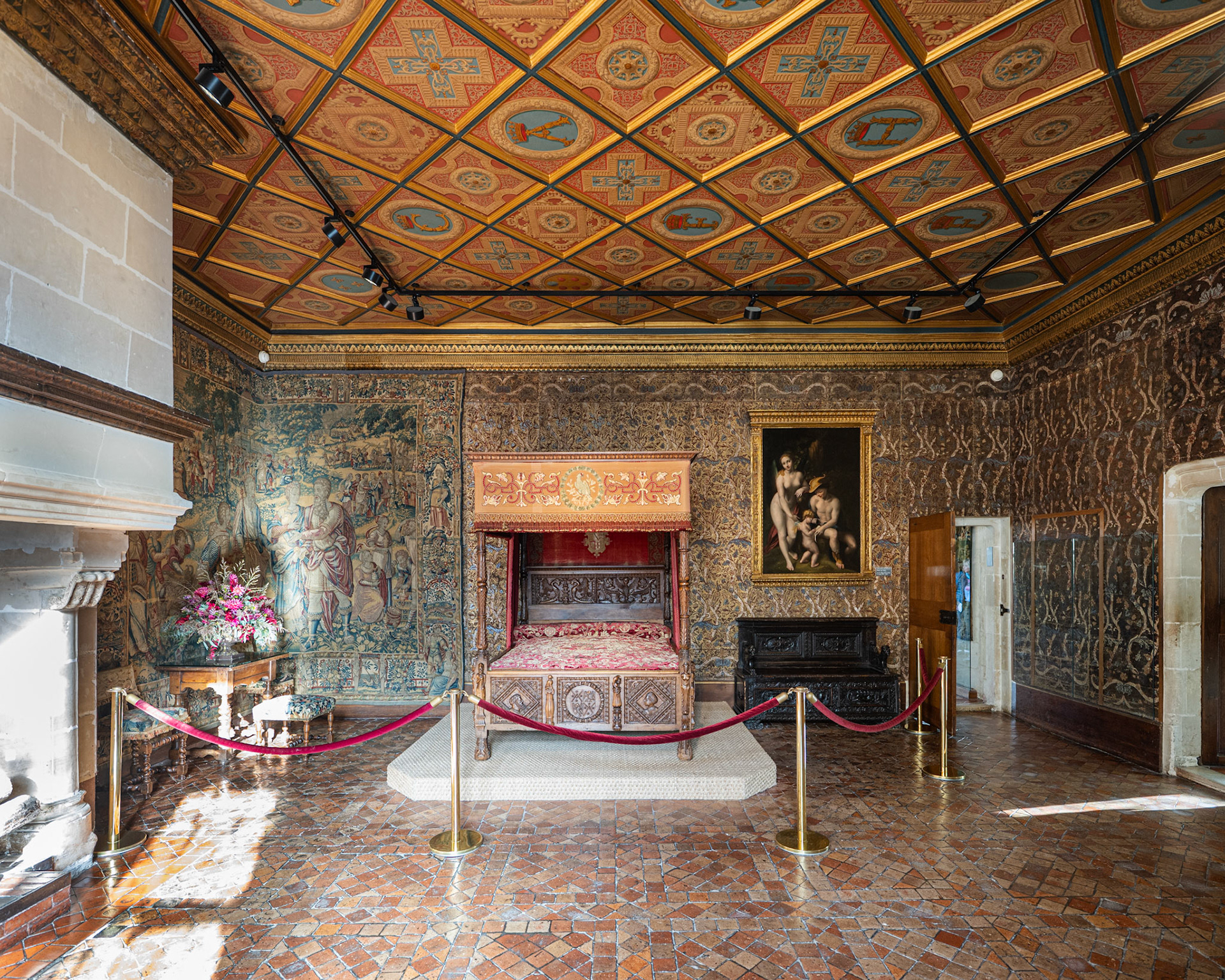
Catherine de Medici’s bedroom
Chenonceau’s refined elegance finds a more intimate echo in the Indre Valley, where Renaissance ideals are distilled into a jewel-like residence.
Château d’Azay-le-Rideau
Constructed between 1518 and 1527 on an island in the Indre River, Azay-le-Rideau epitomizes the balanced proportions and sculptural restraint of the mature French Renaissance. Its reflective setting enhances the emphasis on symmetry and clarity, turning water into an architectural partner rather than a defensive obstacle.
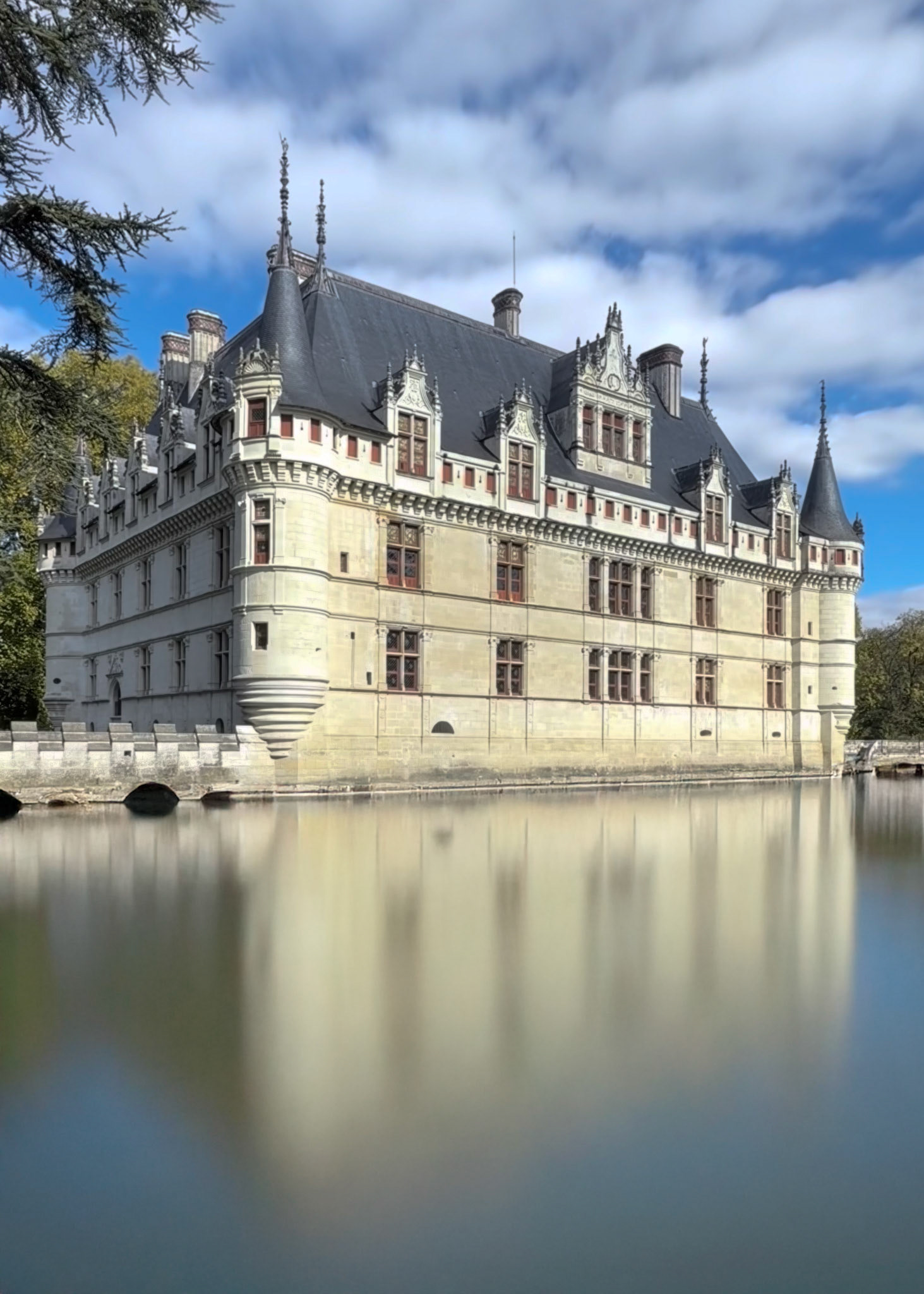
Château d’Azay-le-Rideau
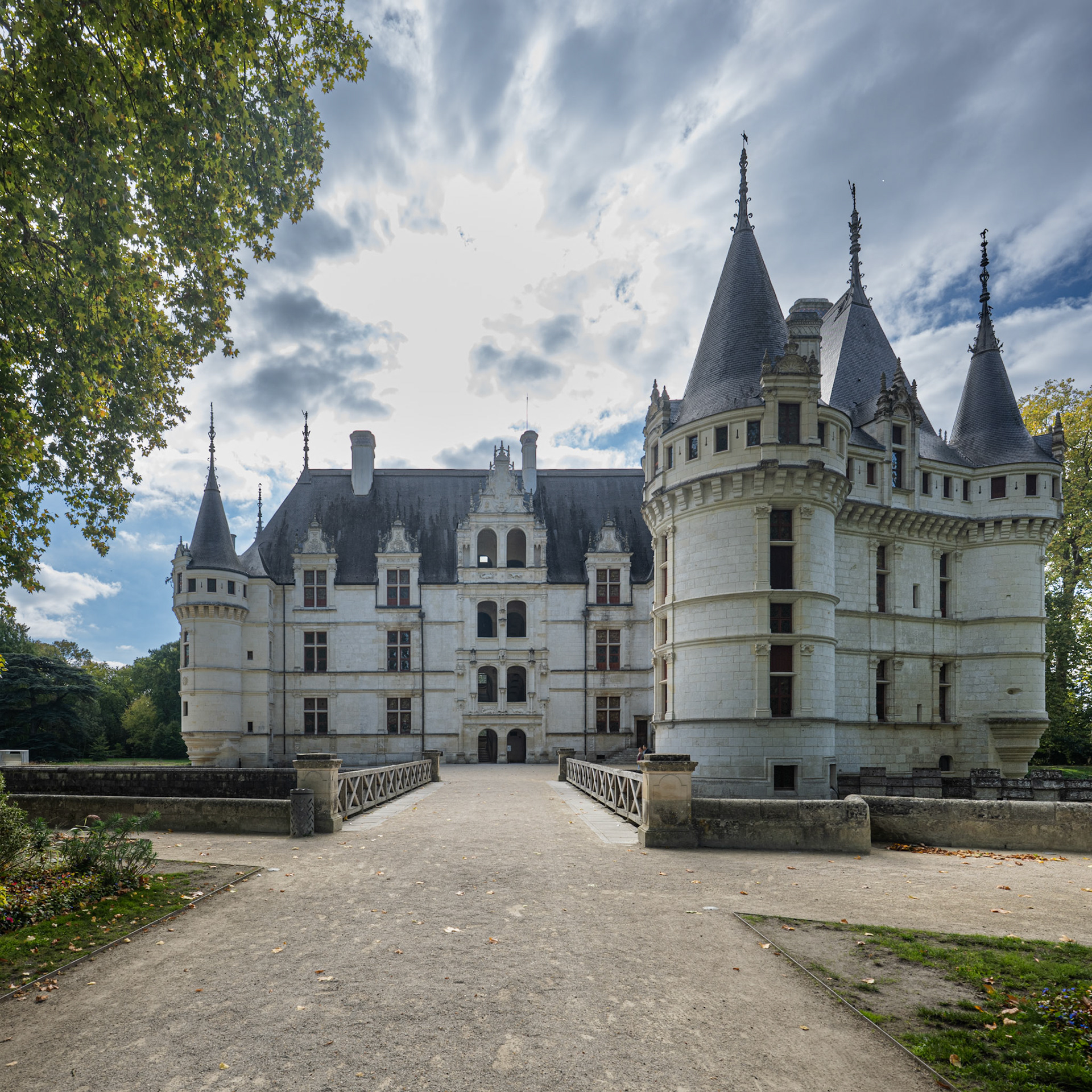
Château d’Azay-le-Rideau
One of its most innovative features is the honor staircase, which replaces the medieval spiral with straight flights rising through a luminous tower—an explicit statement of Renaissance rationality and ceremonial movement. The Renaissance Room presents a historically grounded reconstruction of 16th-century domestic life, including rush matting used for insulation and comfort.
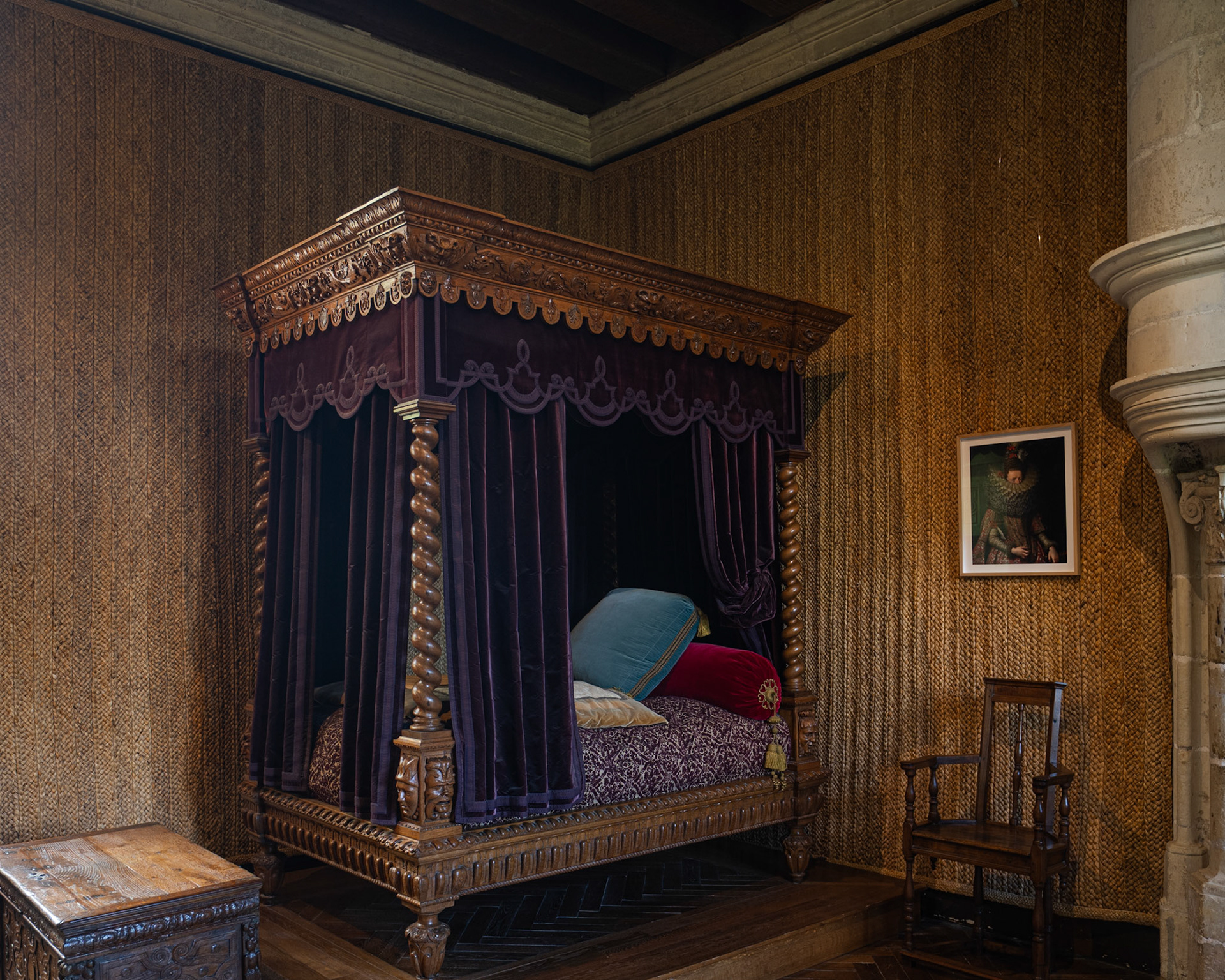
Renaissance Room
If Azay-le-Rideau represents Renaissance harmony at a domestic scale, Chambord magnifies those principles into an unprecedented statement of royal ambition.
Château de Chambord
Commissioned by François I in 1519, Chambord stands as the most audacious expression of the French Renaissance. Its plan fuses a medieval keep complete with corner towers with classical symmetry inspired by Italian models. The château’s symbolic function outweighs its residential practicality, serving primarily as a manifestation of royal power.
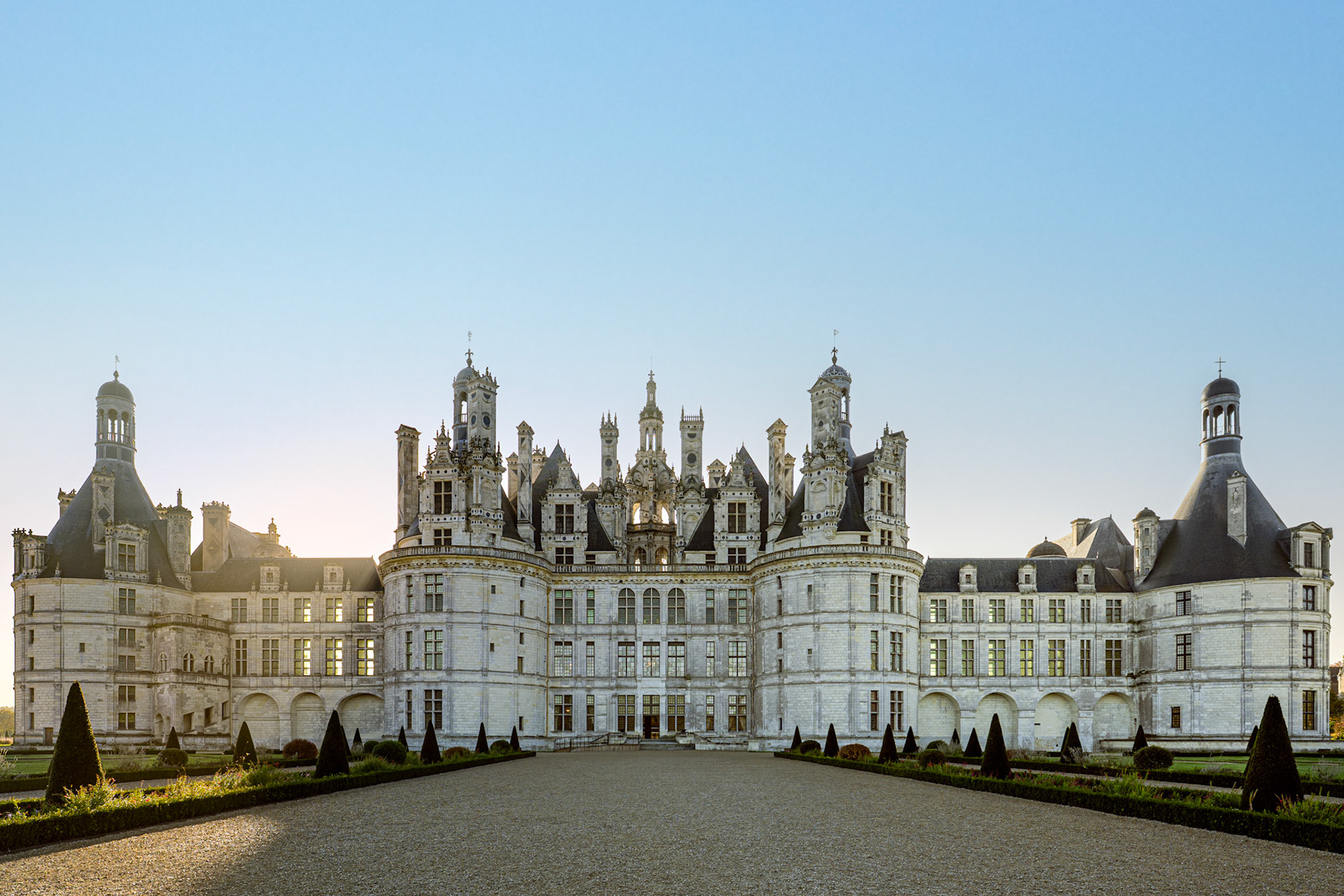
Château de Chambord
The most celebrated feature is the double-helix staircase, traditionally attributed to the conceptual influence of Leonardo da Vinci. This ingenious structure allows simultaneous ascent and descent without encounter, transforming movement into spectacle. Above, the roofscape becomes an open-air viewing platform.
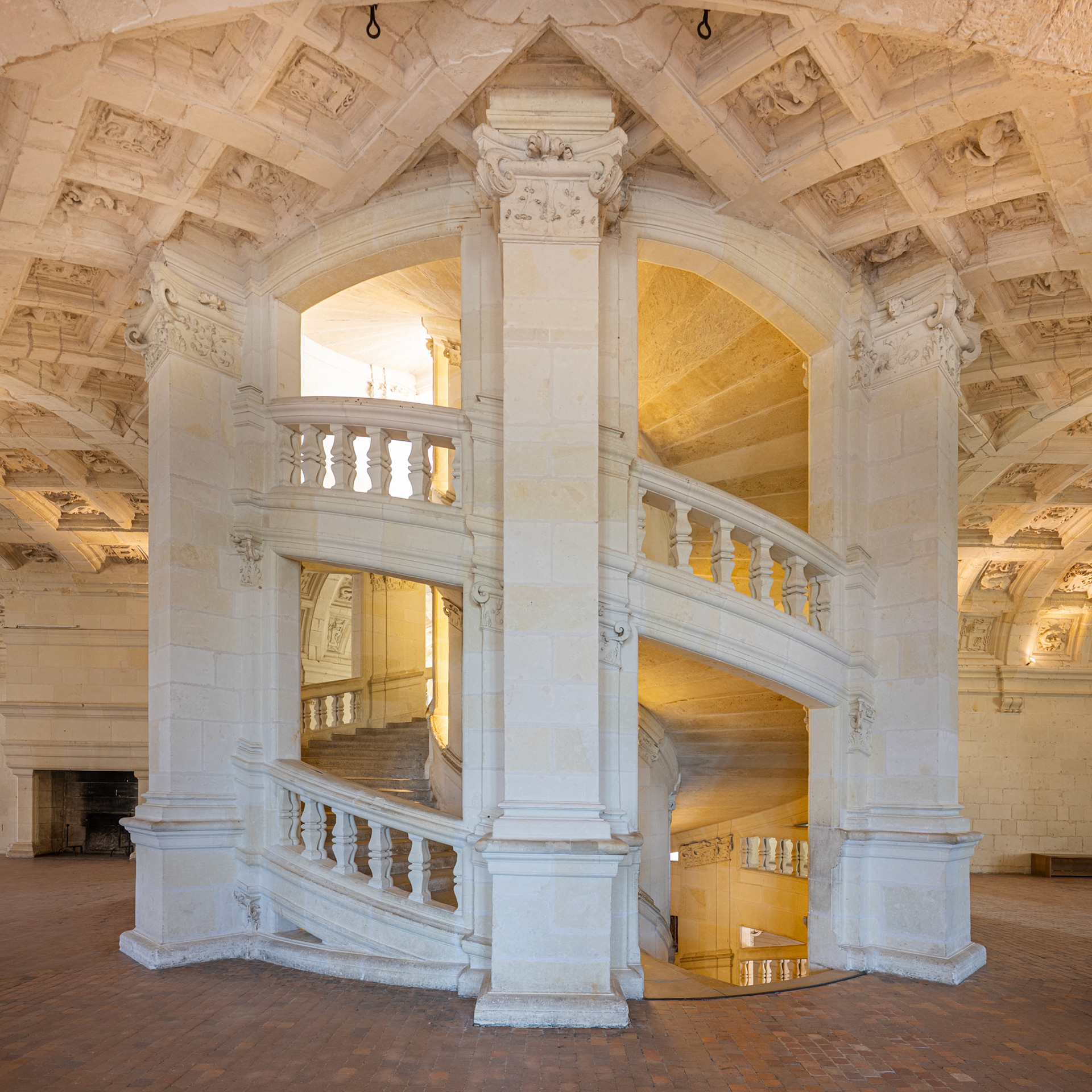
double helix spiral staircase
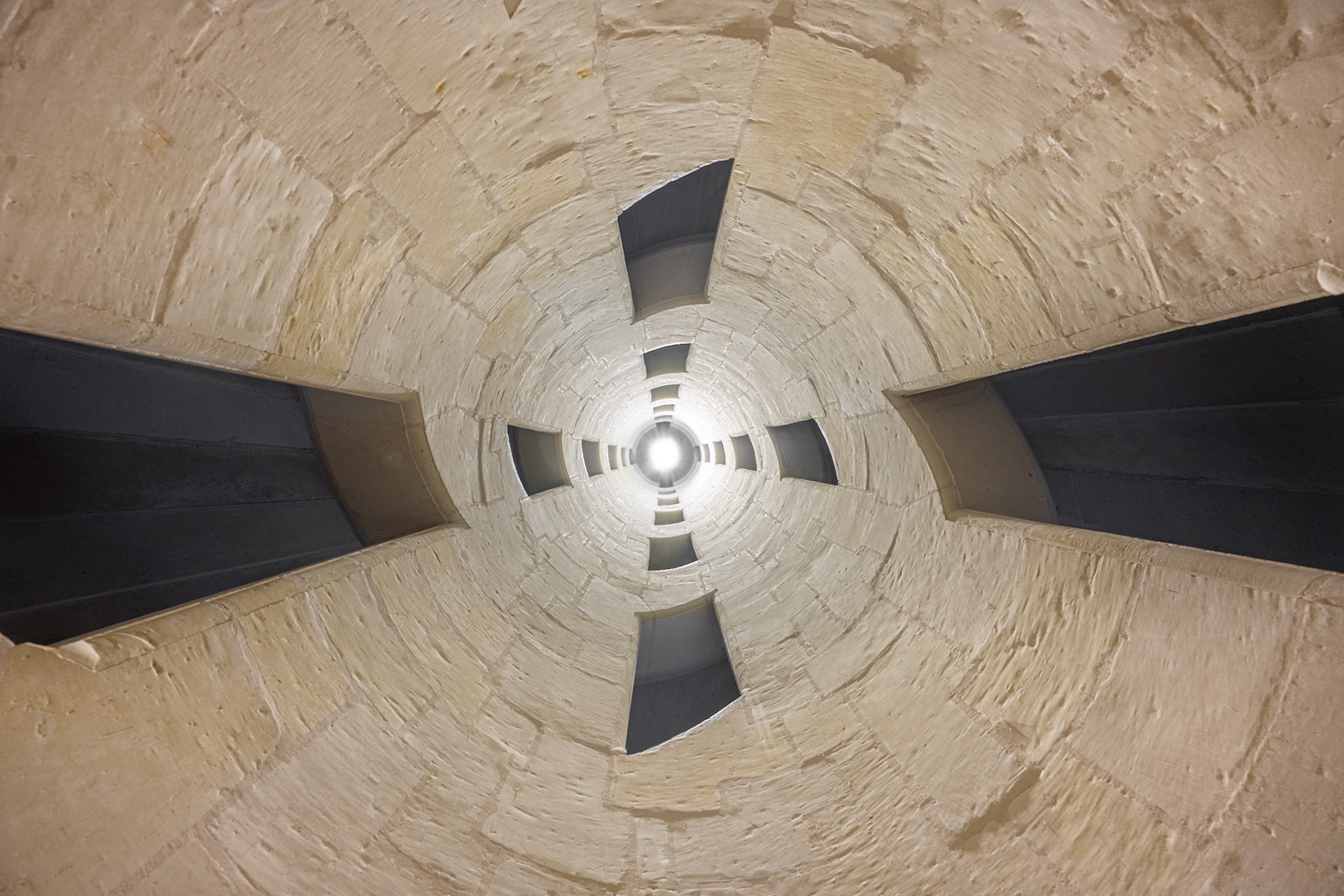
double helix spiral staircase
Even as Chambord reached toward architectural excess, other estates continued to accumulate layers of style rather than erase their past, nowhere more poetically than at Ussé.
Château d’Ussé
Ussé evolved from a medieval fortress into a residence that blends Gothic, Renaissance, and Classical elements into a singular silhouette often described as “fairytale-like.” Its transformation reflects continuity rather than rupture. Later modifications include a grand staircase attributed to François Mansart and a 17th-century trompe-l’œil ceiling in the former guardroom, originally the château’s principal entrance. The Chapel of Sainte-Anne (1521–1535) exemplifies early Renaissance eclecticism, pairing Italianate entrance medallions with French Gothic rib vaulting.
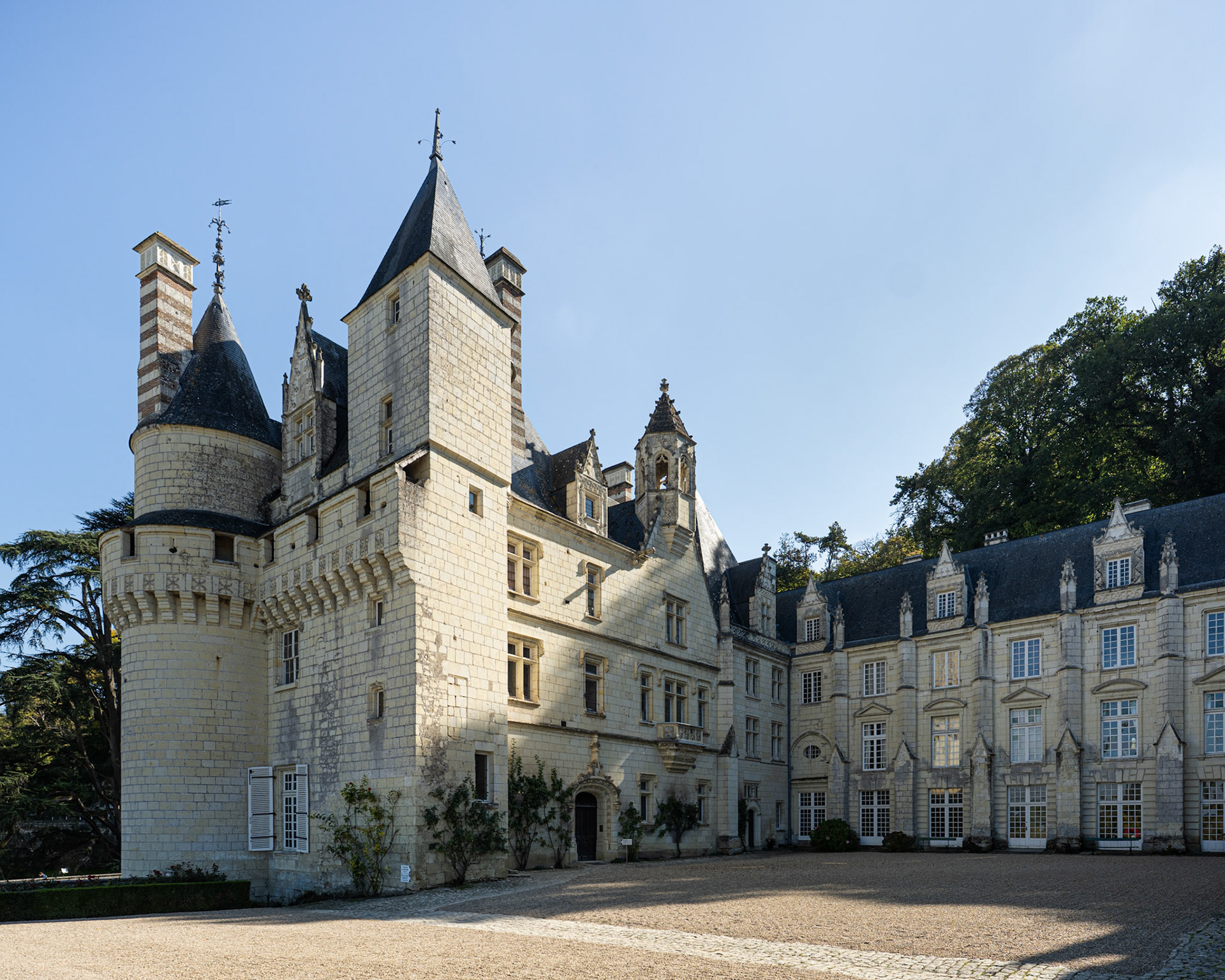
Château d’Ussé
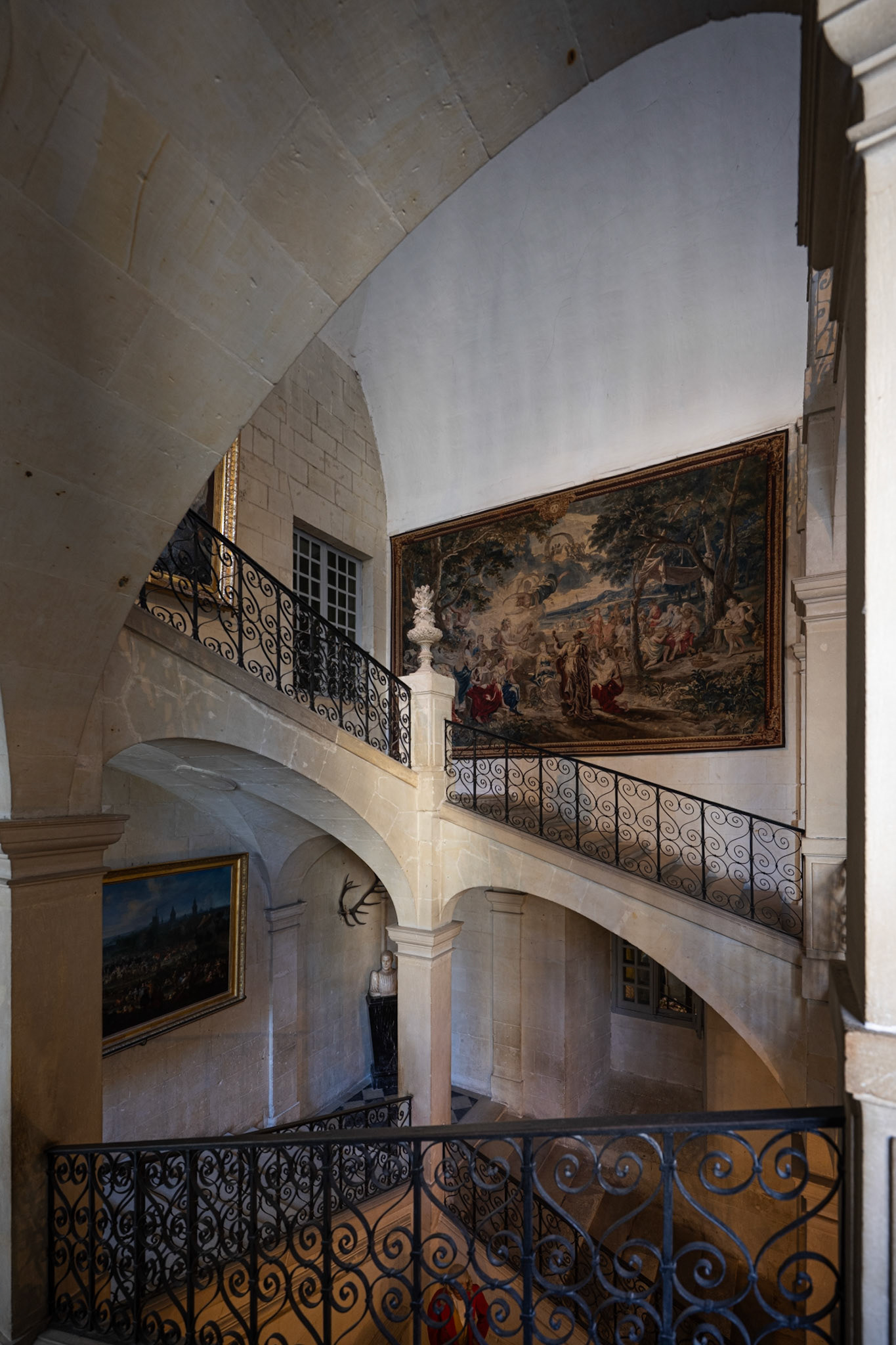
grand staircase
The great building boom of the Loire culminated not in vertical monumentality, but in the orchestration of landscape itself, a shift fully realized at Villandry.
Château de Villandry
Completed in 1536 by Jean Le Breton, superintendent of royal finances and overseer of Chambord, Villandry is widely considered the last of the great Renaissance châteaux of the Loire. While the medieval keep survives as a vestige of the earlier fortress, the remaining structure is governed by Renaissance symmetry and clarity.
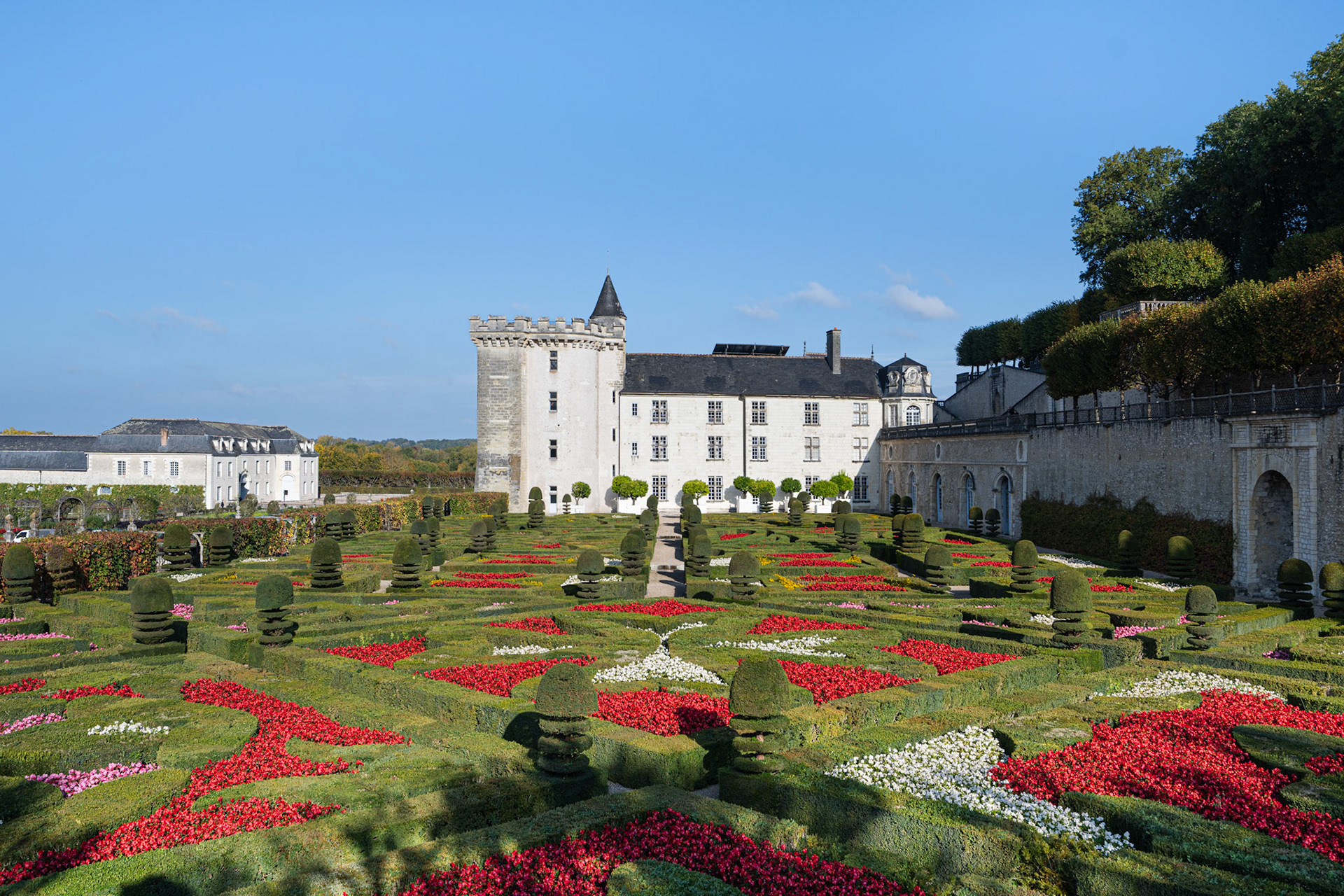
Château de Villandry
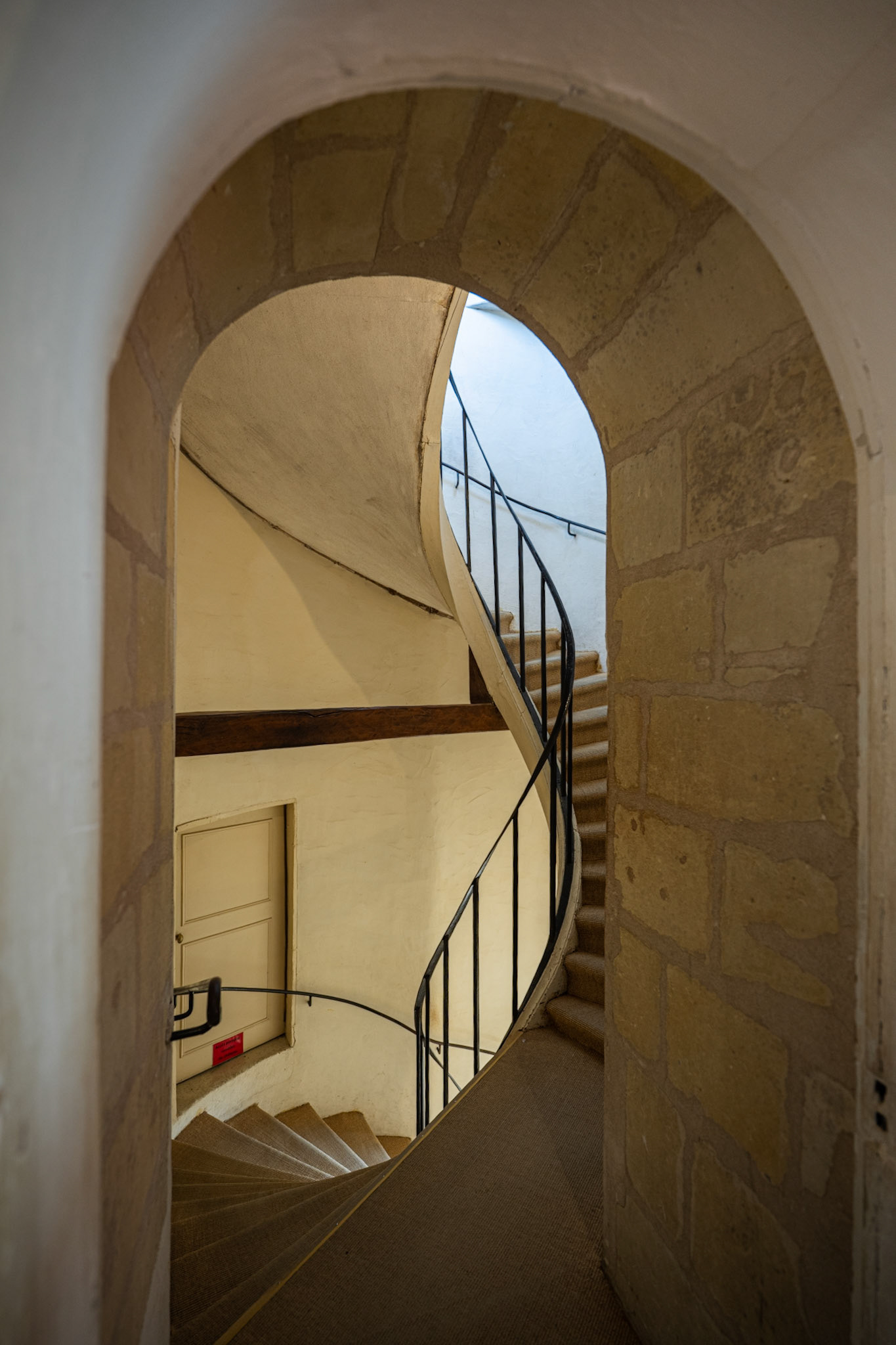
medieval keep
The interior reflects successive periods of occupation, including an 18th-century dining room and a rare 15th-century Hispano-Moorish ceiling in the Oriental Drawing Room. Villandry’s enduring fame, however, lies in its gardens: multi-level compositions reconstructed in the early 20th century according to Renaissance principles of geometry, hierarchy, and visual control, completing the architectural ensemble.
Planning Your Visit
The architectural density of the Loire Valley requires sufficient time to process the evolution from fortress to palace. To optimize your itinerary, begin in the heart of the valley and conclude with the grandest royal monuments.
Tours (First 2 Days)
Start your journey here to access the western and central gems. From this hub, you are well-positioned to visit Azay-le-Rideau, Villandry, Langeais and Ussé.
While moving from Tours to Blois, visit Chenonceau and Amboise
Blois (Final 2 Days)
Relocate east for your final two days to immerse yourself in the high-royal history of the Château de Blois and the artistic transition at Chaumont-sur-Loire. For the most conclusive finale, reserve Château de Chambord for your final afternoon. As the undisputed zenith of the French Renaissance, its monumental scale and fantastical roofscape deliver a definitive statement on how royal ambition transformed the Loire landscape into a theater of stone, power, and artistic invention.