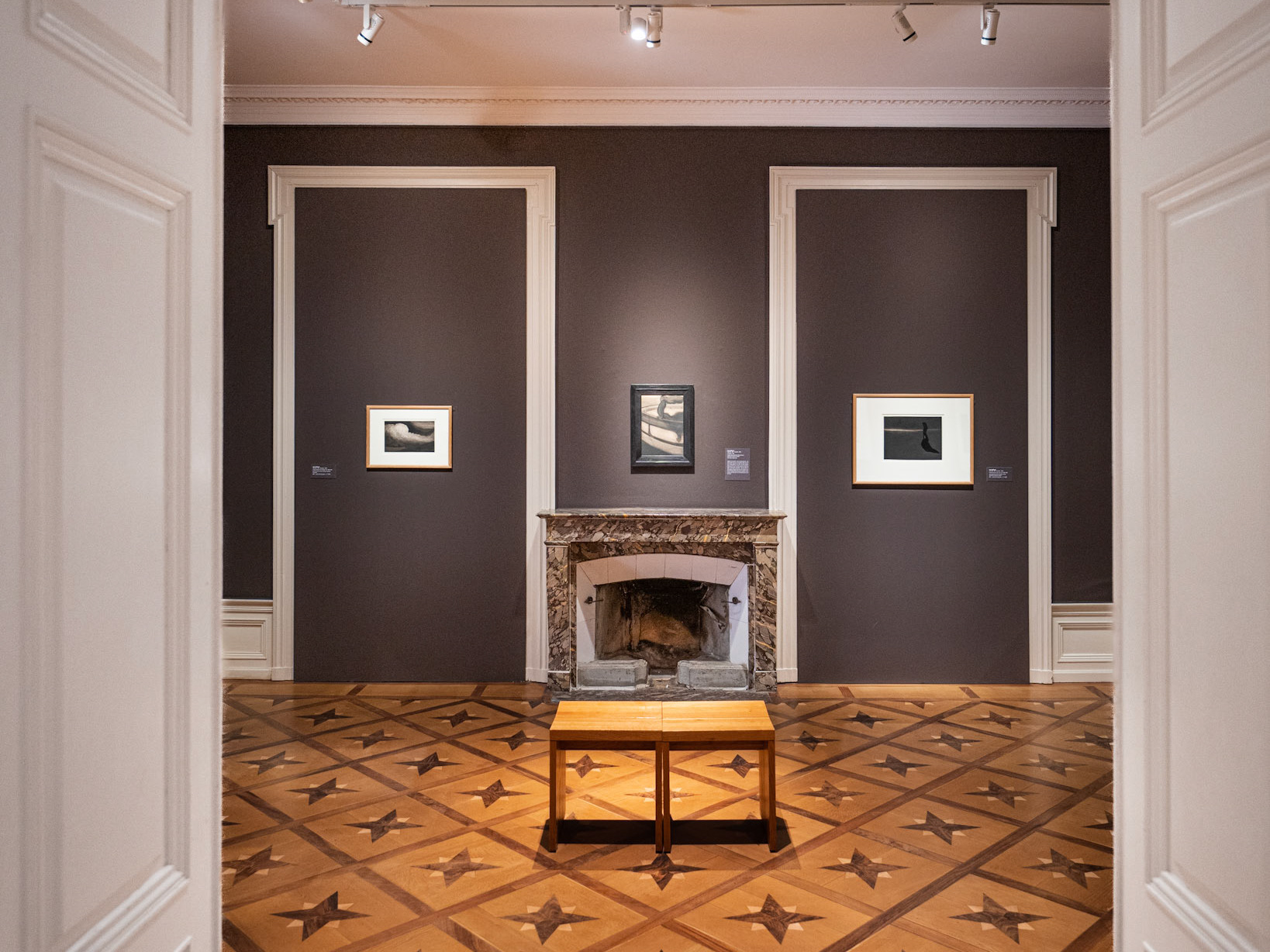
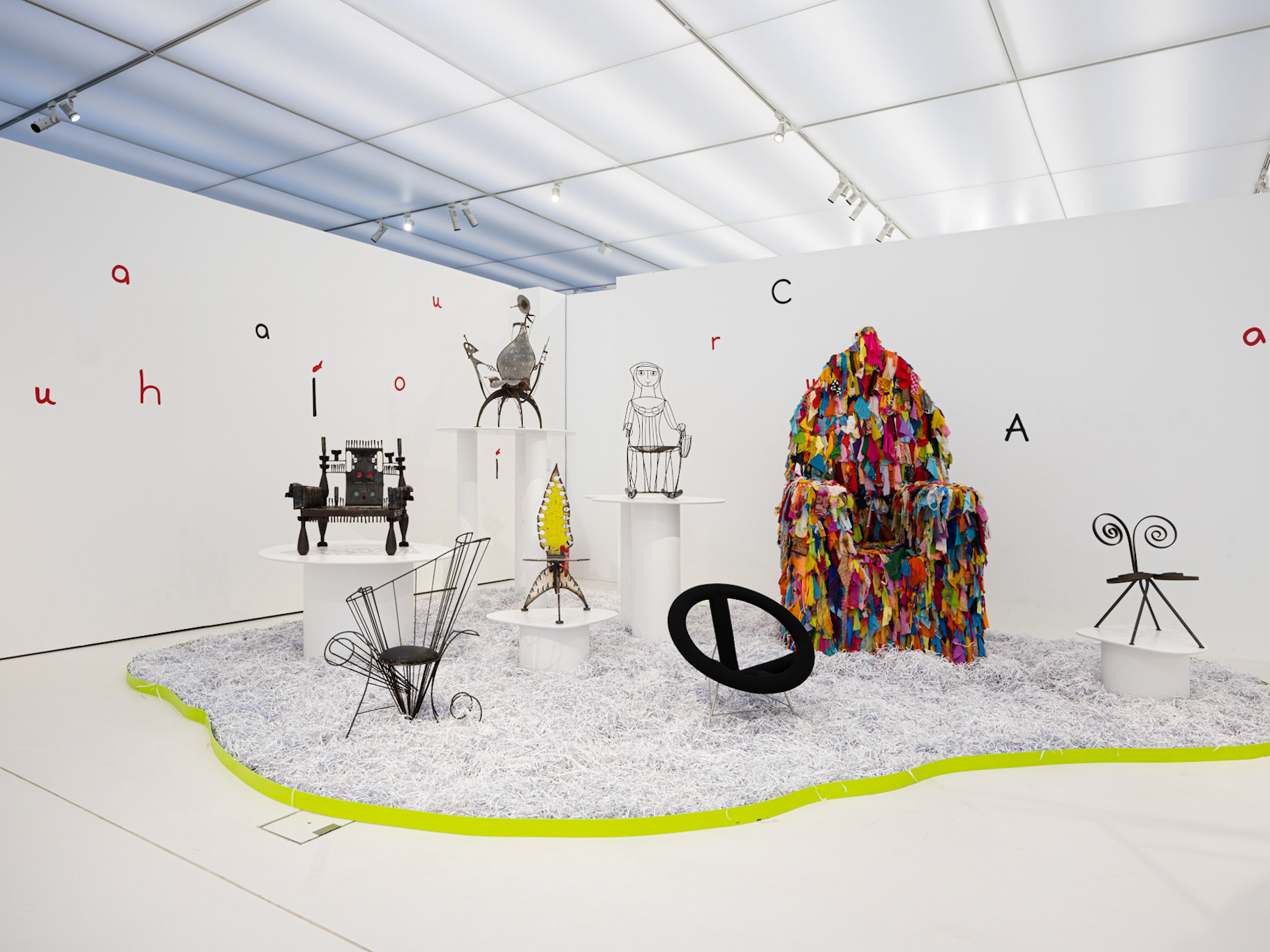
Flowers to Art is a unique exhibition at the intersection of floral design and visual art. Over 10 years ago, founders Angela Wettstein and Rudolf Velhagen developed the concept for Blumen für die Kunst and successfully brought it to life at the Aargauer Kunsthaus. During the exhibition, floral designers reinterpret artworks from the museum’s collection, creating a captivating dialogue between two art forms.
Pia Fries / Evelyn Krebs
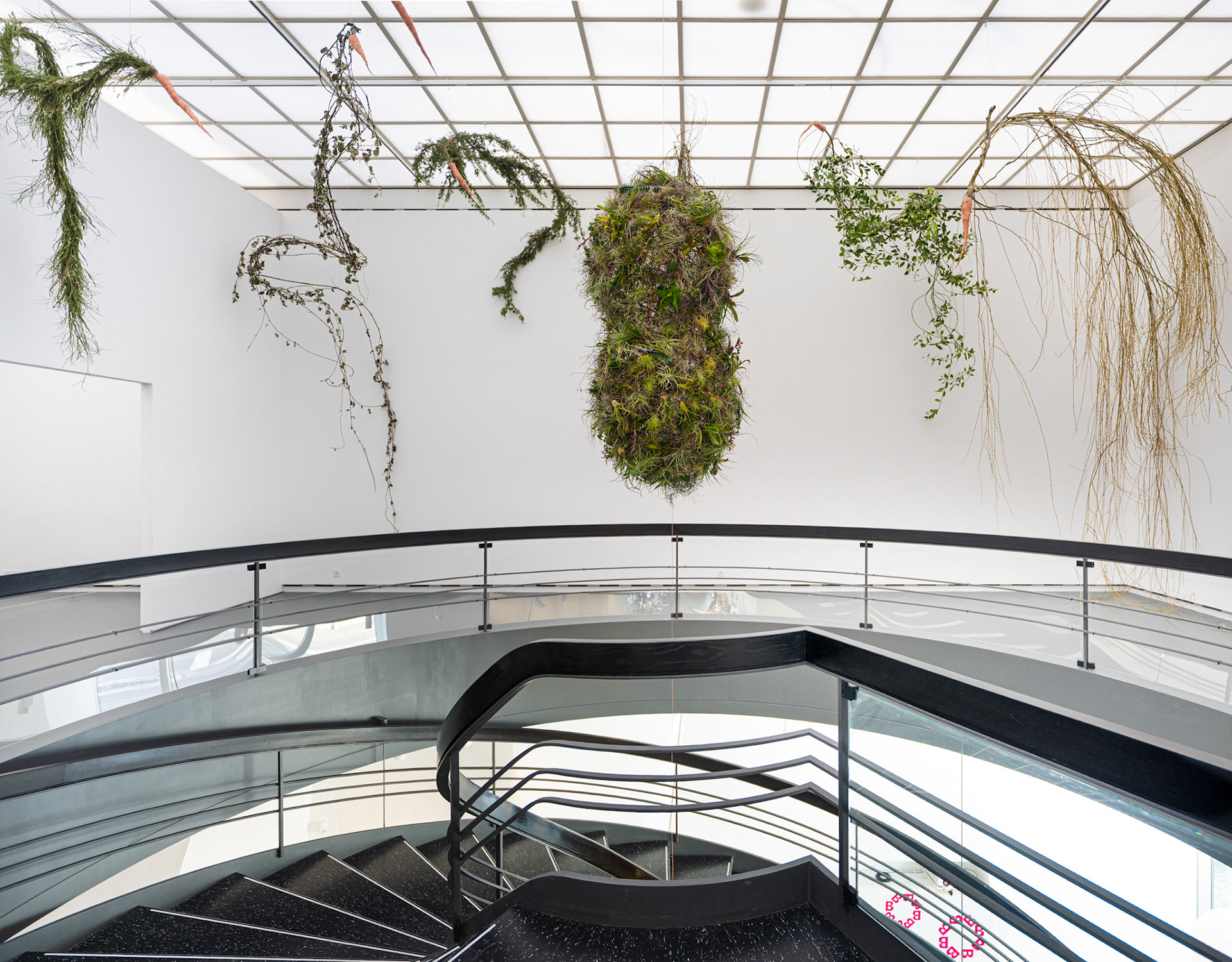
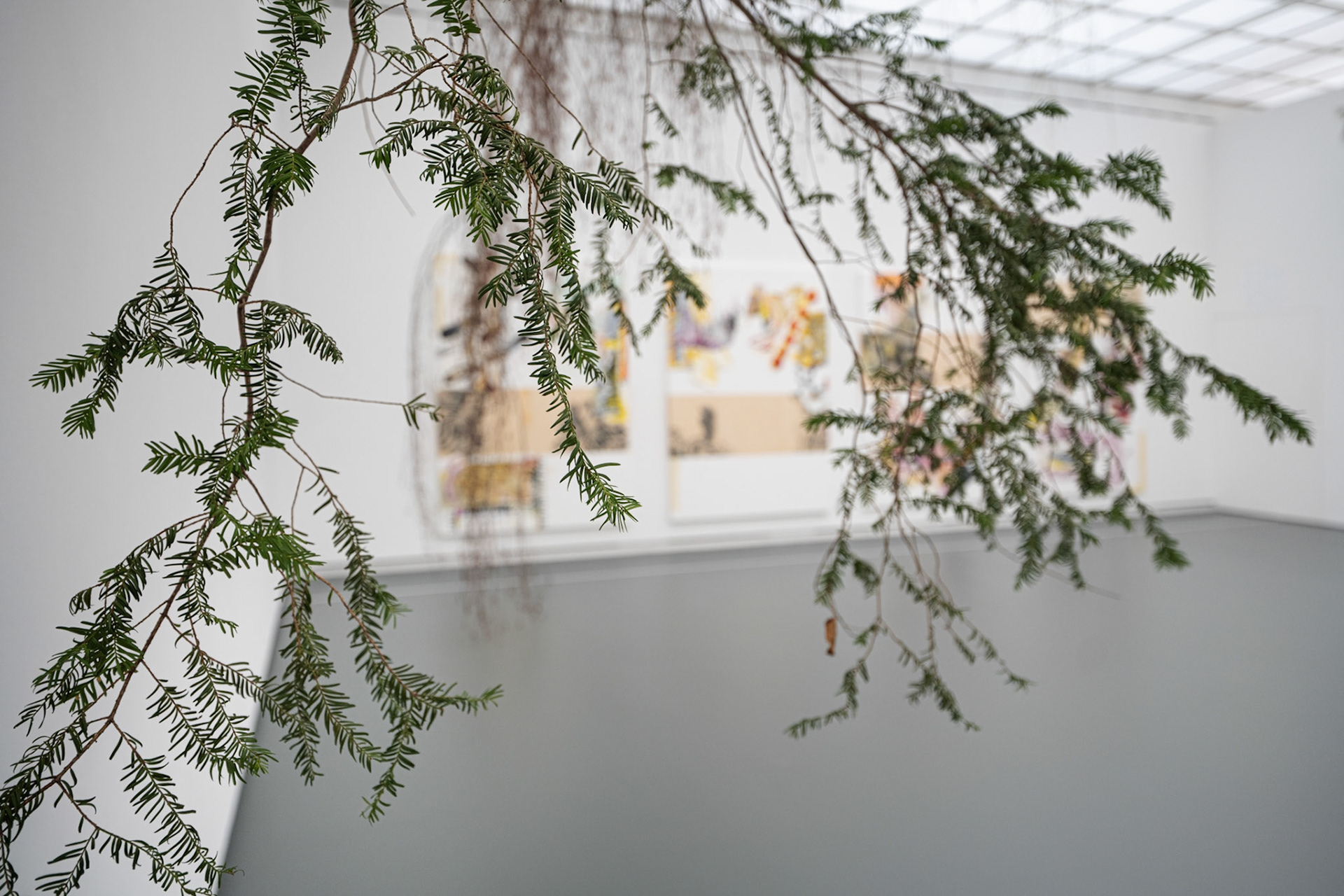
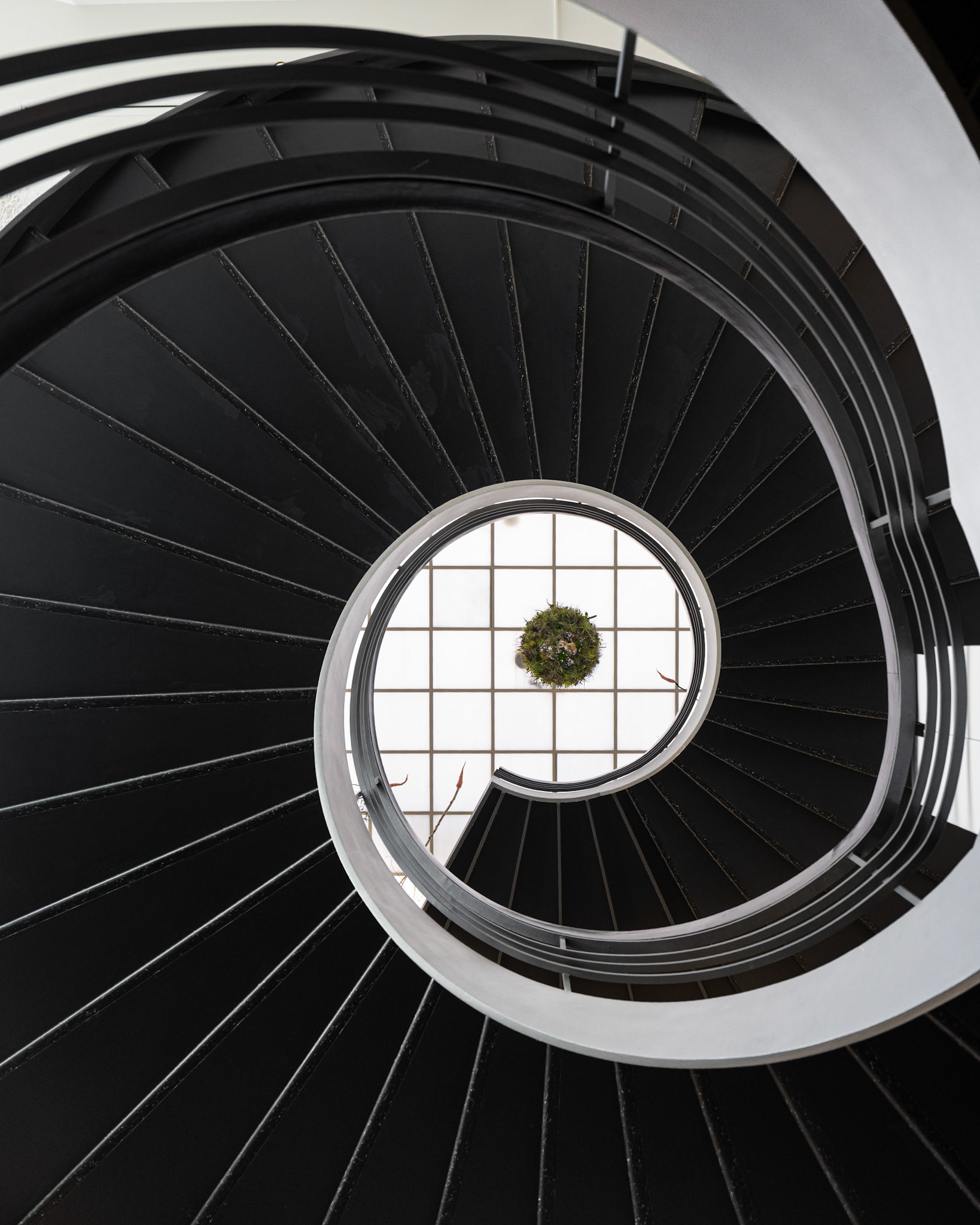
In "schwarz blumen, erucarum ortus" (2015), Pia Fries combines silk-screened botanical illustrations from naturalist Maria Sibylla Merian with thick, gestural applications of oil paint. Florist Evelyn Krebs responds to this theme of metamorphosis by creating a floral arrangement that focuses on the forces of nature. Using natural elements to evoke protective envelopes and growth phases, the design features a symbolic cocoon to represent energy and anchoring. Long roots trail through the space, mirroring Fries's visible tool marks and the material dynamics of the painting.
Pia Fries / Evelyn Kreb
Pia Fries / Evelyn Kreb
Pia Fries / Evelyn Kreb
Barbara Müller / Annika Egger
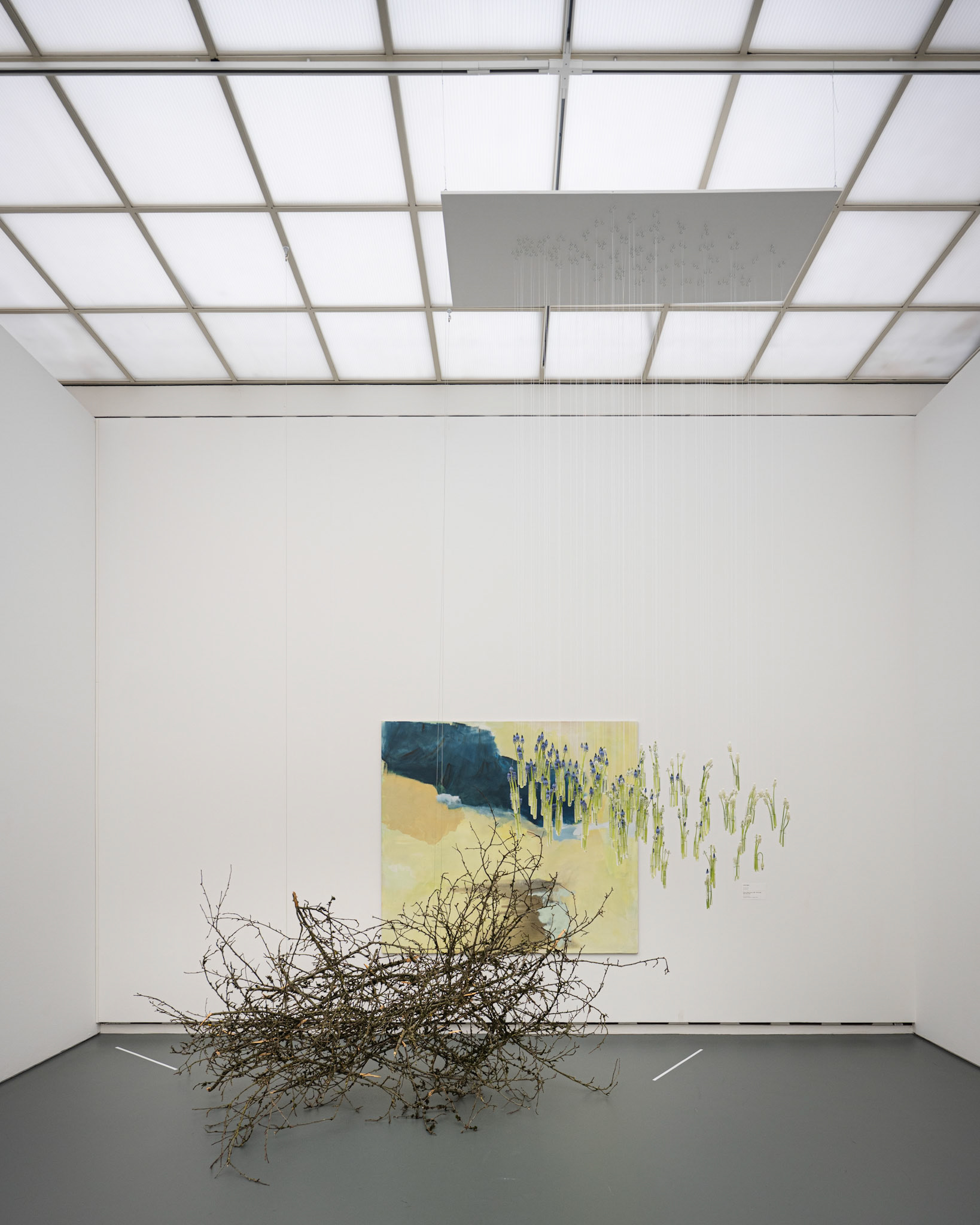
Barbara Müller’s painting (Ohne Title, 2015) is characterized by poured paint that is spread with utensils or by tilting the canvas, resulting in abstract, landscape-like color gradients. Annika Egger interprets this movement through a transparent and airy arrangement . The use of blue muscaris refers to the tension just before a storm in a nod to the dense, cloud-like blue forms in the painting.
Barbara Müller / Annika Egger

Barbara Müller / Annika Egger
Barbara Müller / Rémy Jaggi
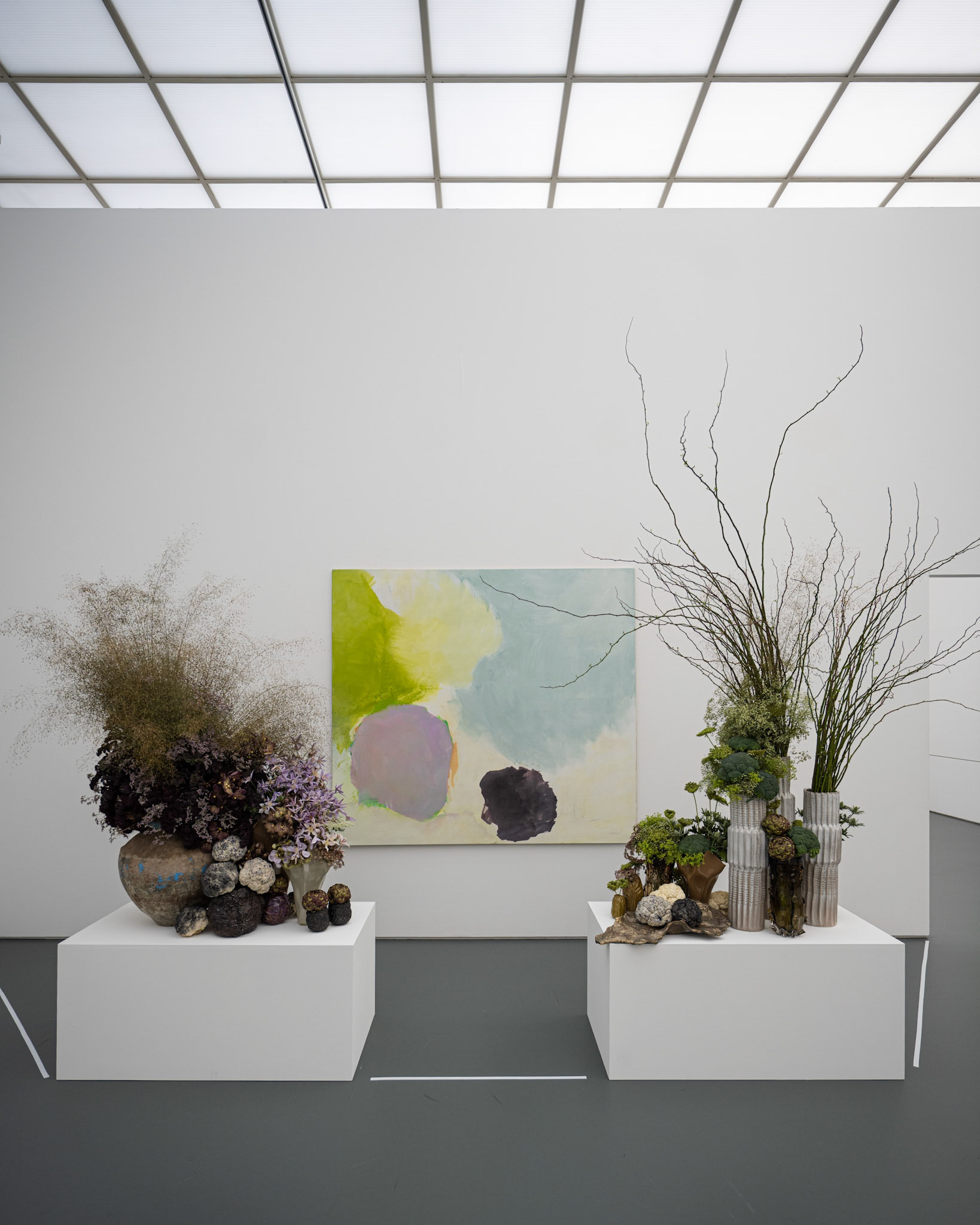
For this second work by Barbara Müller, which utilizes multiple thin layers (glacis) to create a sense of internal tension, Rémy Jaggi follows the painting's internal movement. The floral design begins with a dark "winter" zone of roots and kale, then develops upward and to the left with bright blooms of clematis and vanda orchids. This progression from dense, dark elements to light, vaporous textures mirrors the painting's transitions between solid color and delicate, cloud-like zones.
Barbara Müller / Rémy Jaggi
Per Kirkeby / Annika Junghans
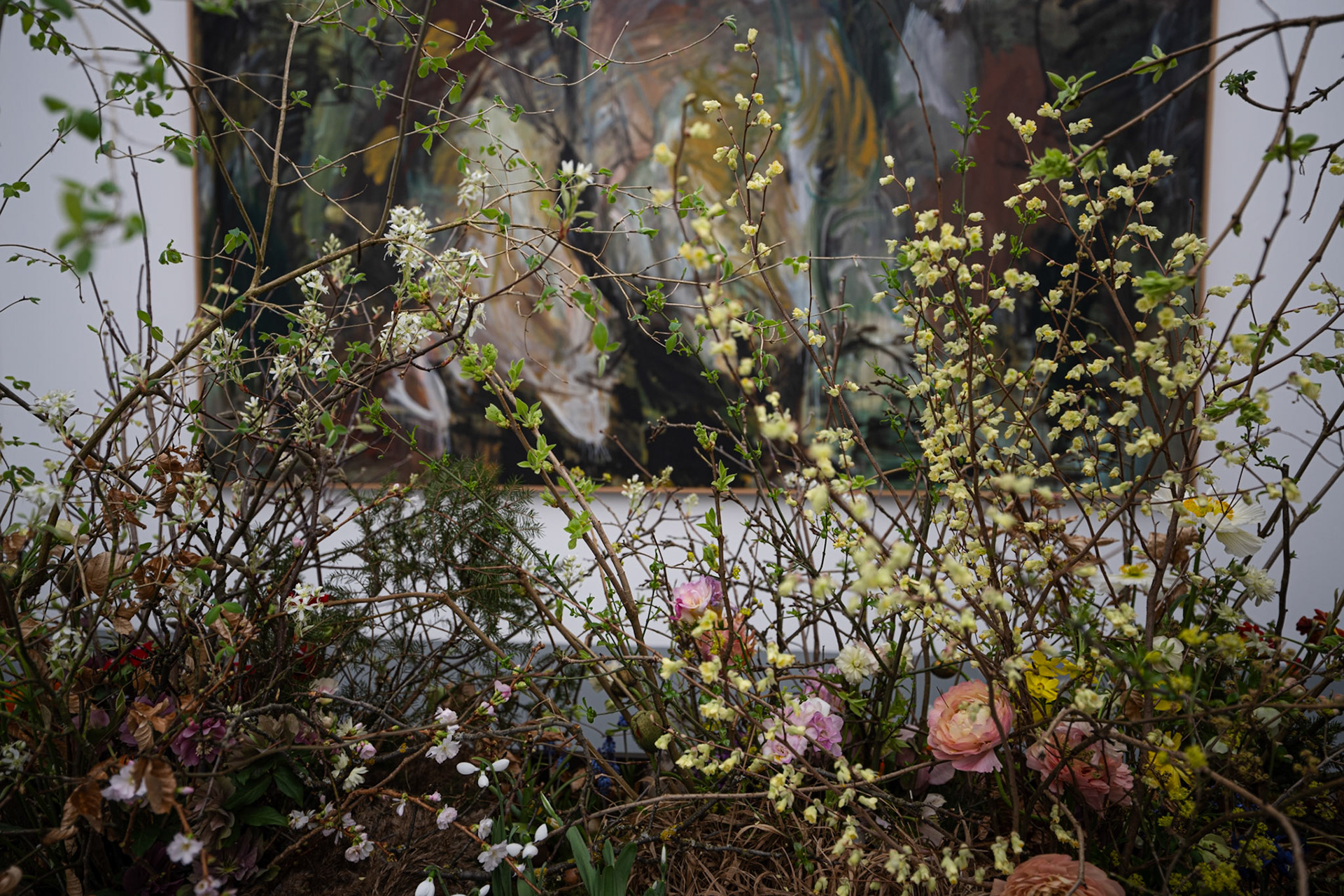
Per Kirkeby’s abstract landscape (1980) focuses on the physical act of painting, using thick brushstrokes and earth tones to suggest trees and rocks. Annika Junghans translates this "painting as process" into a floral composition that foregoes traditional containers. By using natural structures like amelanchier branches, hellebores, and fritillaria, the arrangement highlights the different growth forms and material density of the plants, mirroring Kirkeby's focus on the transformation of raw material over time.

Per Kirkeby / Annika Junghans
Per Kirkeby / Annika Junghans
Joseph Marioni / Samantha Bühler
Samantha Bühler interprets Joseph Marioni’s Yellow Painting (2002). By layering mimosas within translucent metallic structures, she mirrors Marioni’s technique of applying paint in successive, controlled flows.
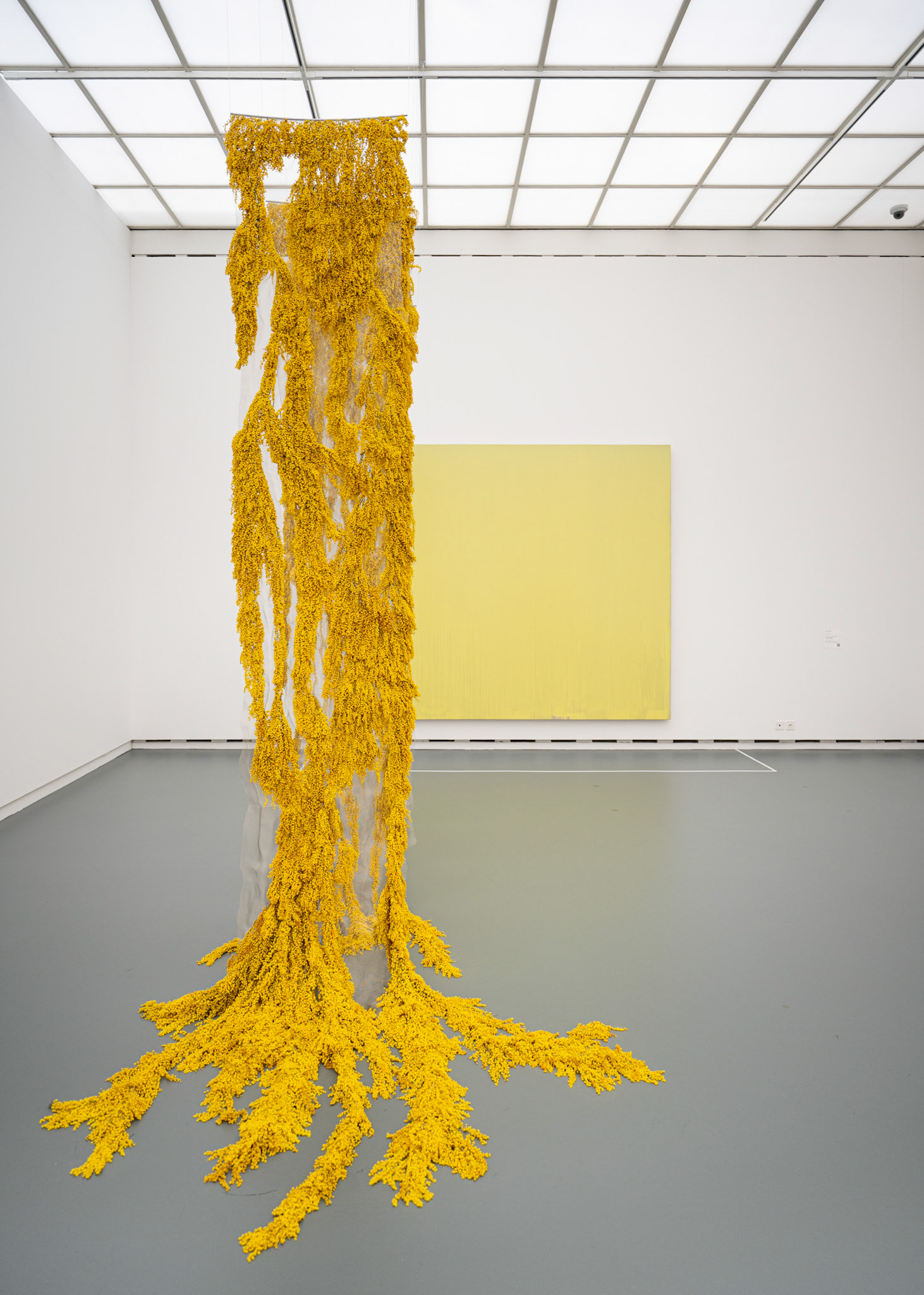
Joseph Marioni / Samantha Bühler
Stefan Gritsch / Melanie Schneider
Stefan Gritsch artwork from 1993 treats paint as a physical material, pressing masses of primary colors into blocks to create autonomous objects. Melanie Schneider mirrors this structured approach by using red dogwood to form a strict, right-angled frame that echoes the painting's geometry. Within this frame, seasonal flowers are placed to accentuate depth and value, mimicking the vertical and horizontal layering of Gritsch’s glazed color blocks.
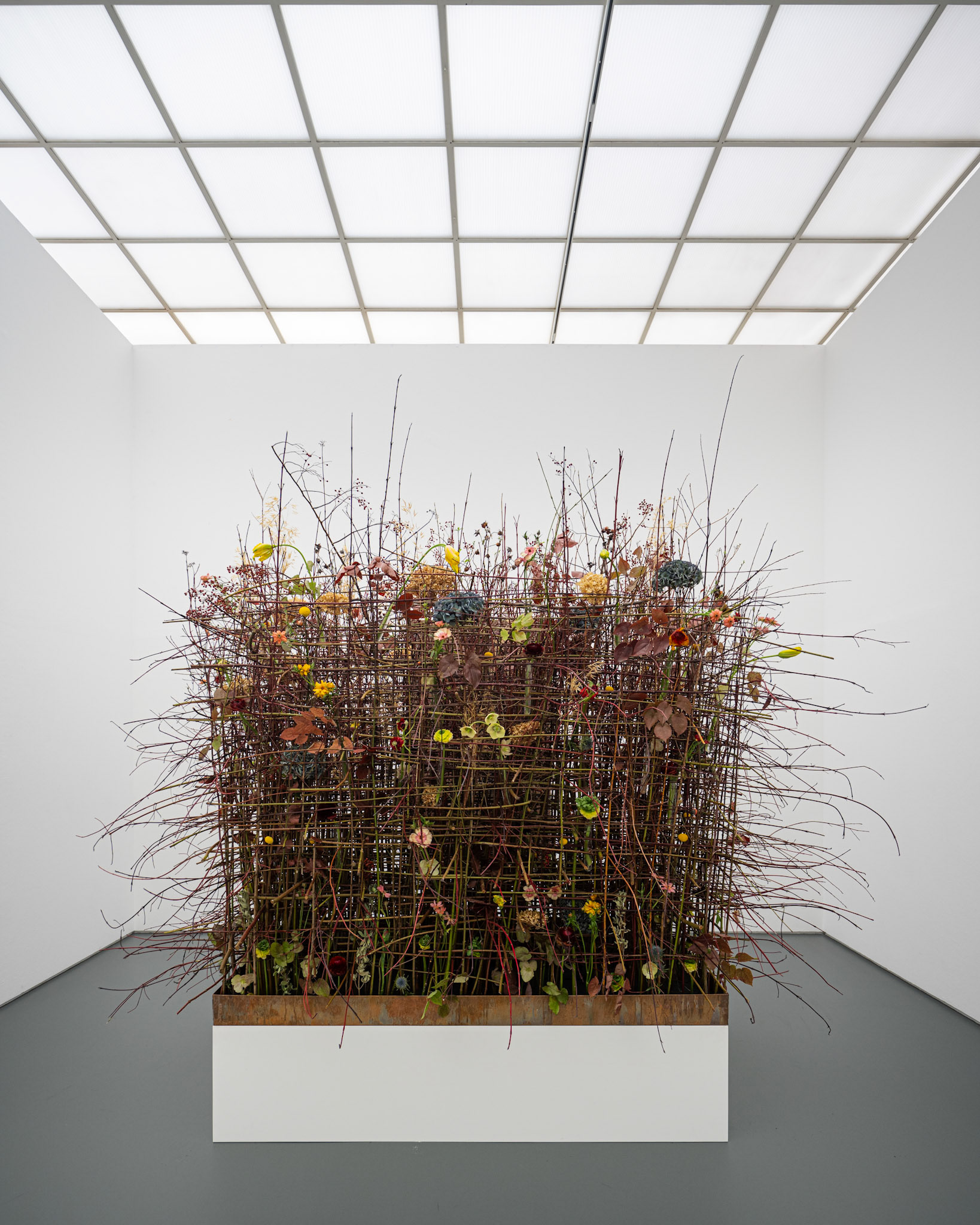
Stefan Gritsch / Melanie Schneider
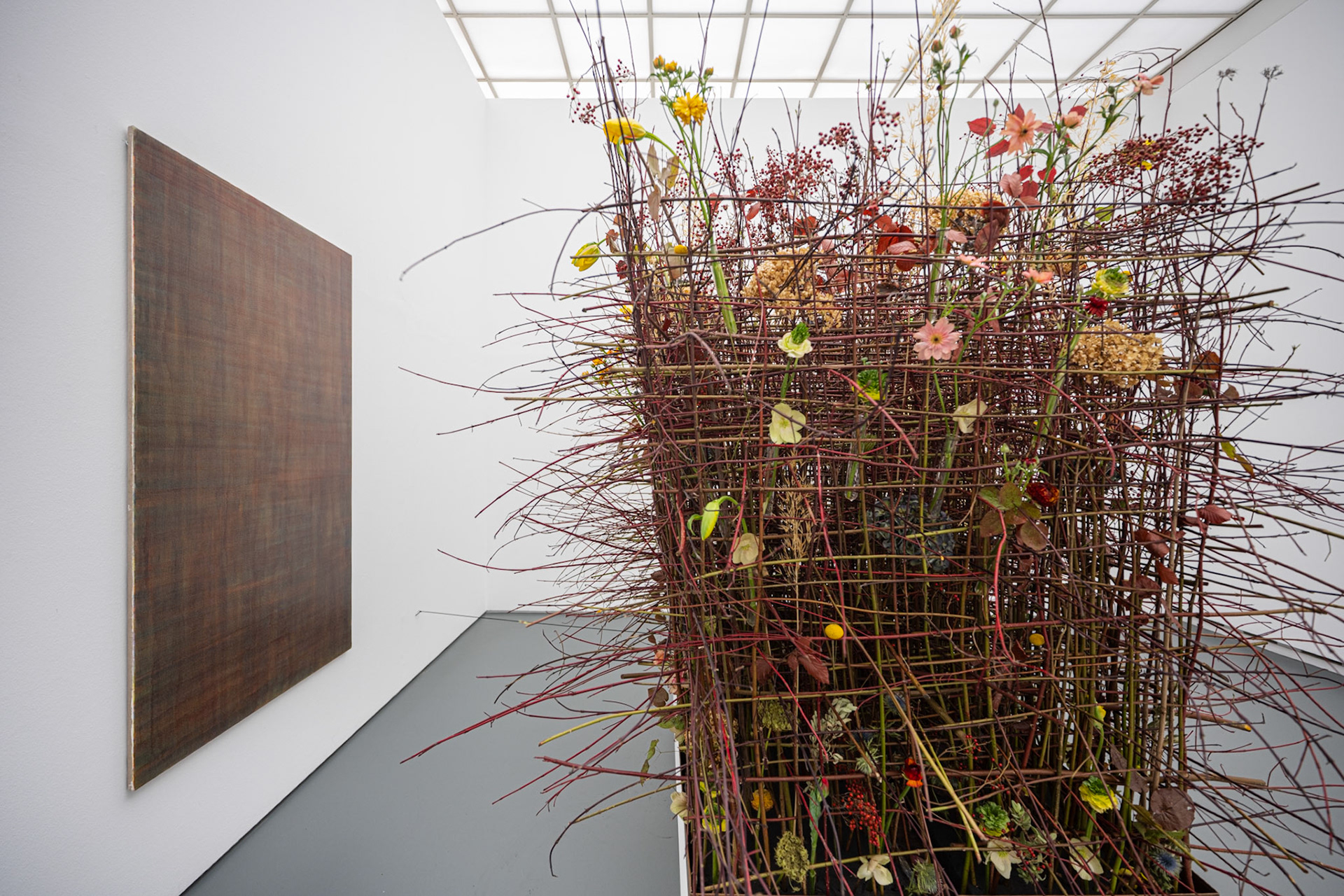
Stefan Gritsch / Melanie Schneider
Richard Paul Lohse / Peter Schwitter
Richard Paul Lohse's "Reihenelemente zu rhythmischen Gruppen konzentriert" (1946/1956) is composed of vertical bands in rhythmic color sequences that create the illusion of shimmering planes. Peter Schwitter’s floral interpretation utilizes the strict order of the painting as its starting point, using carnations to match the rhythmic color groups. However, the arrangement introduces tension through black chains (representing order and limitation) while allowing the flowers to eventually "escape" the structure and find their own free-flowing rhythm in the room.

Richard Paul Lohse / Peter Schwitter
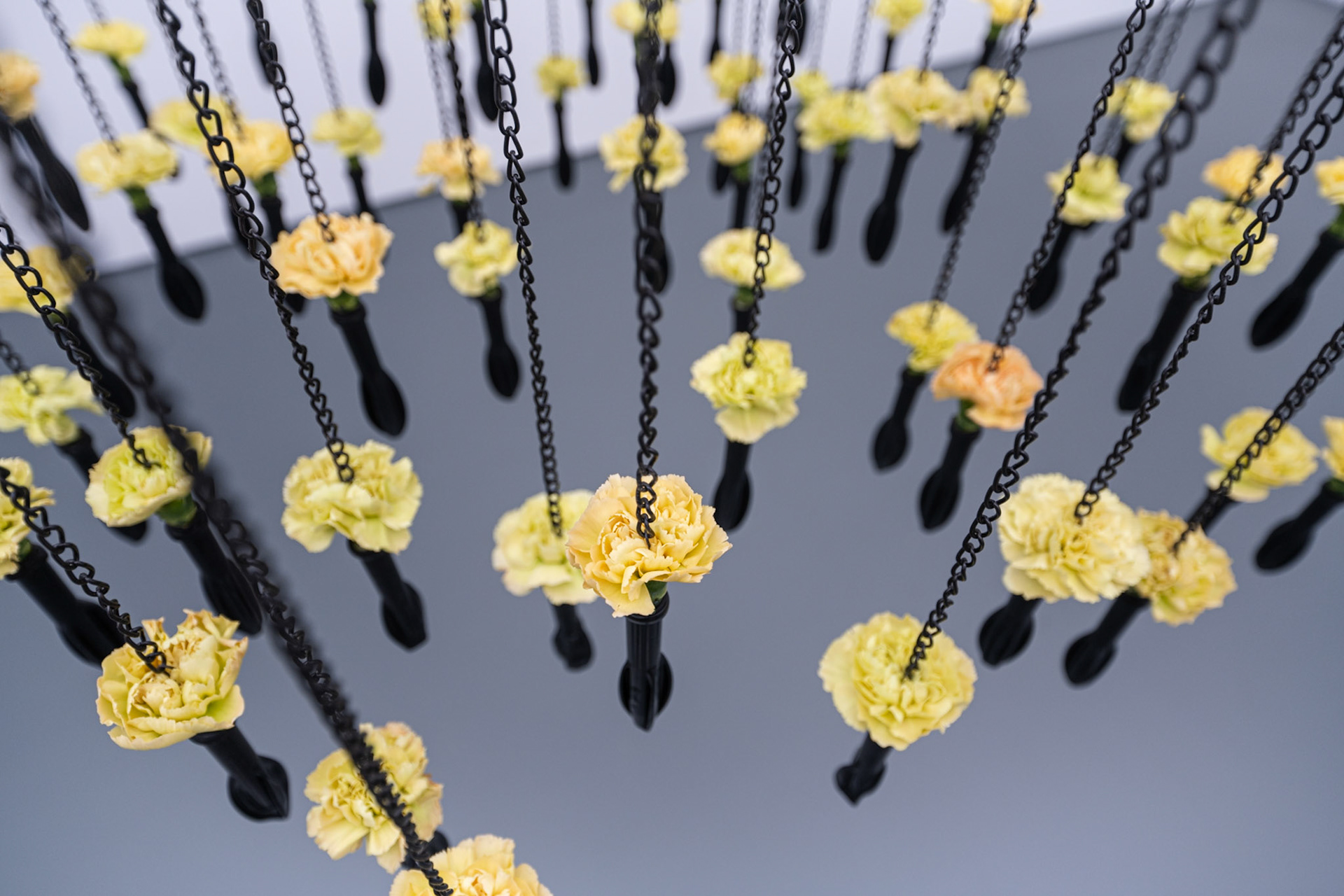
Richard Paul Lohse / Peter Schwitter
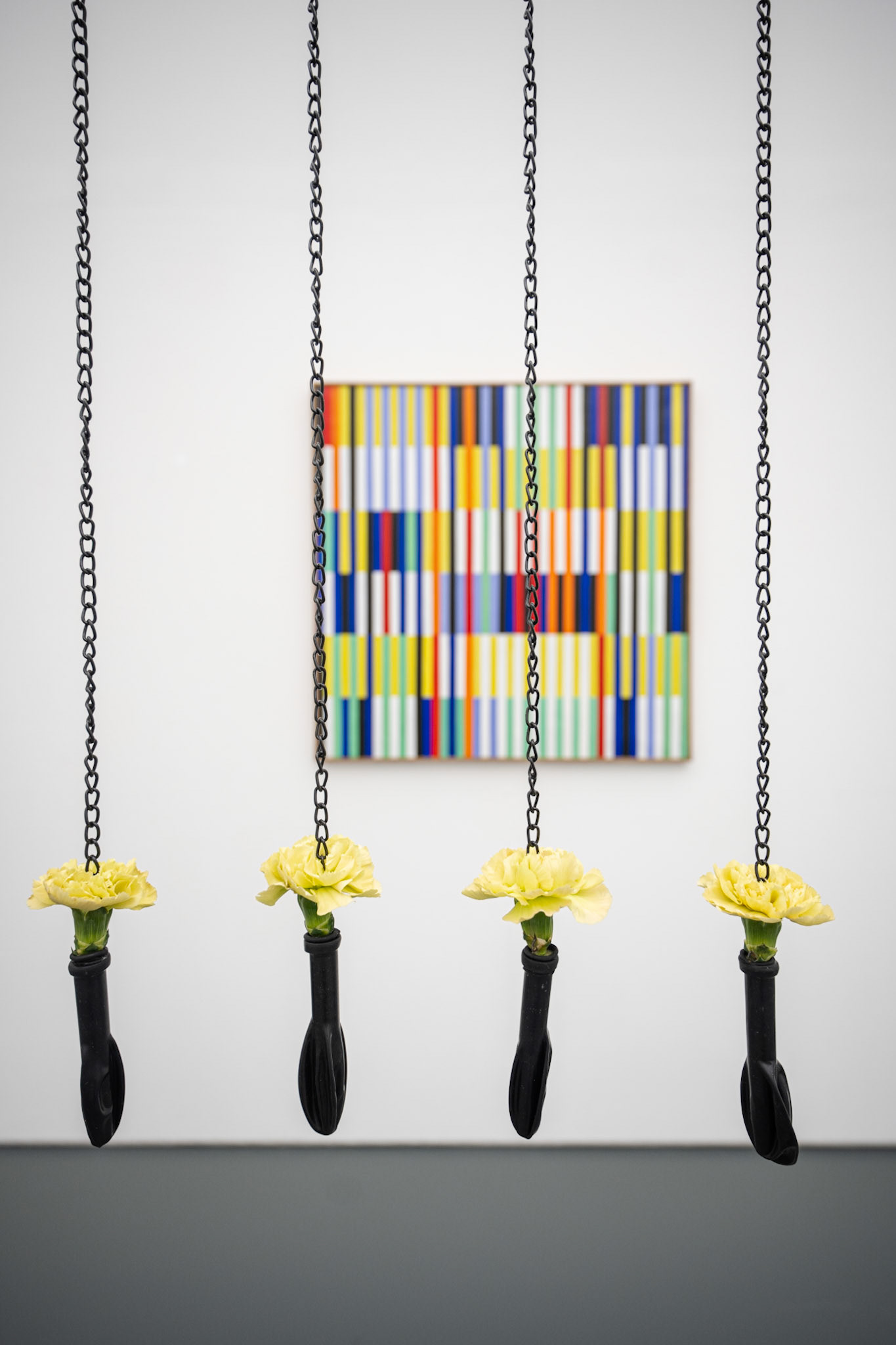
Richard Paul Lohse / Peter Schwitter
Barbara Müller / Claudia Alijew Wüthrich
In this untitled artwork created in 1998/99, Barbara Müller applies fluid oil paint in multiple layers, leaving visible empty spaces to create pictorial depth. Claudia Alijew Wüthrich responds with a sober, finely sorted arrangement that plays with transparency and void. Using fresh beech branches, ferns, and spring bulbs (crocus, narcissus), the floral work creates a dialogue with the painting’s layered composition rather than simply illustrating it, opening up new "poetic spaces" of resonance.
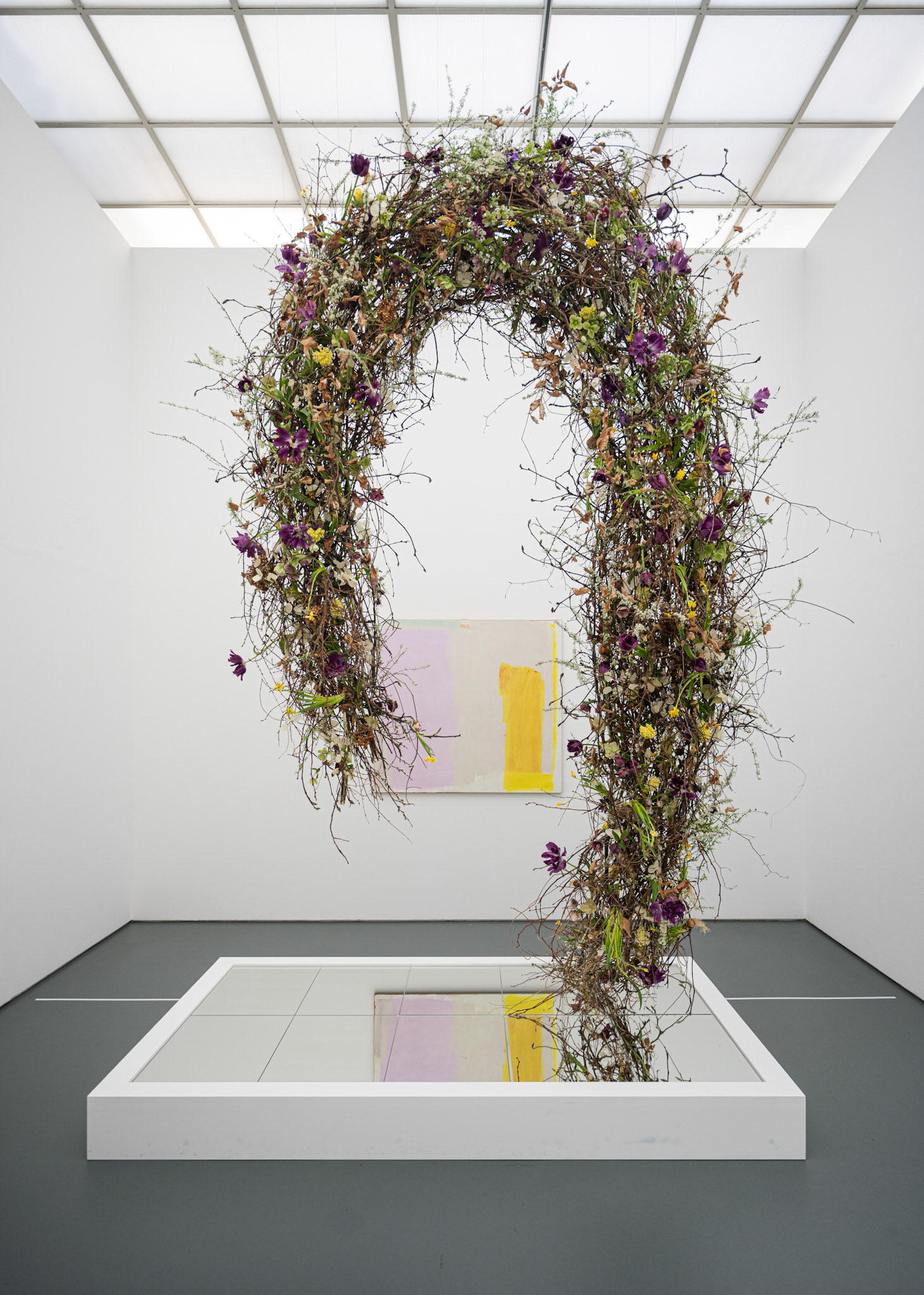
Barbara Müller / Claudia Alijew Wüthrich

Barbara Müller / Claudia Alijew Wüthrich
Roman Signer / Marcel Gabriel
Roman Signer’s "time-sculpture" features a fan that moves water through a long conduit, adding the dimension of time to a 3D object. Marcel Gabriel interprets this experimental approach by replacing the water with "grass on stems". The airflow from the fan causes these grasses to dance rhythmically, translating the sculpture's movement into a fleeting, light, and playful floral image that mirrors Signer’s original logic.

Roman Signer / Marcel Gabriel
Silvia Bächli / Marie Bongard
The mural "Quer" (2017) consists of 64 furniture elements found in Paris, divided horizontally by a black acrylic line. Marie Bongard reflects this use of everyday materials and serial composition by using "leftovers" from flower production. She arranges stems in 220 black buckets placed in parallel, creating a repetitive, linear composition. This approach shifts the focus from decorative beauty to the materiality and value of the objects, directly referencing Bächli and Hattan’s artistic methods.
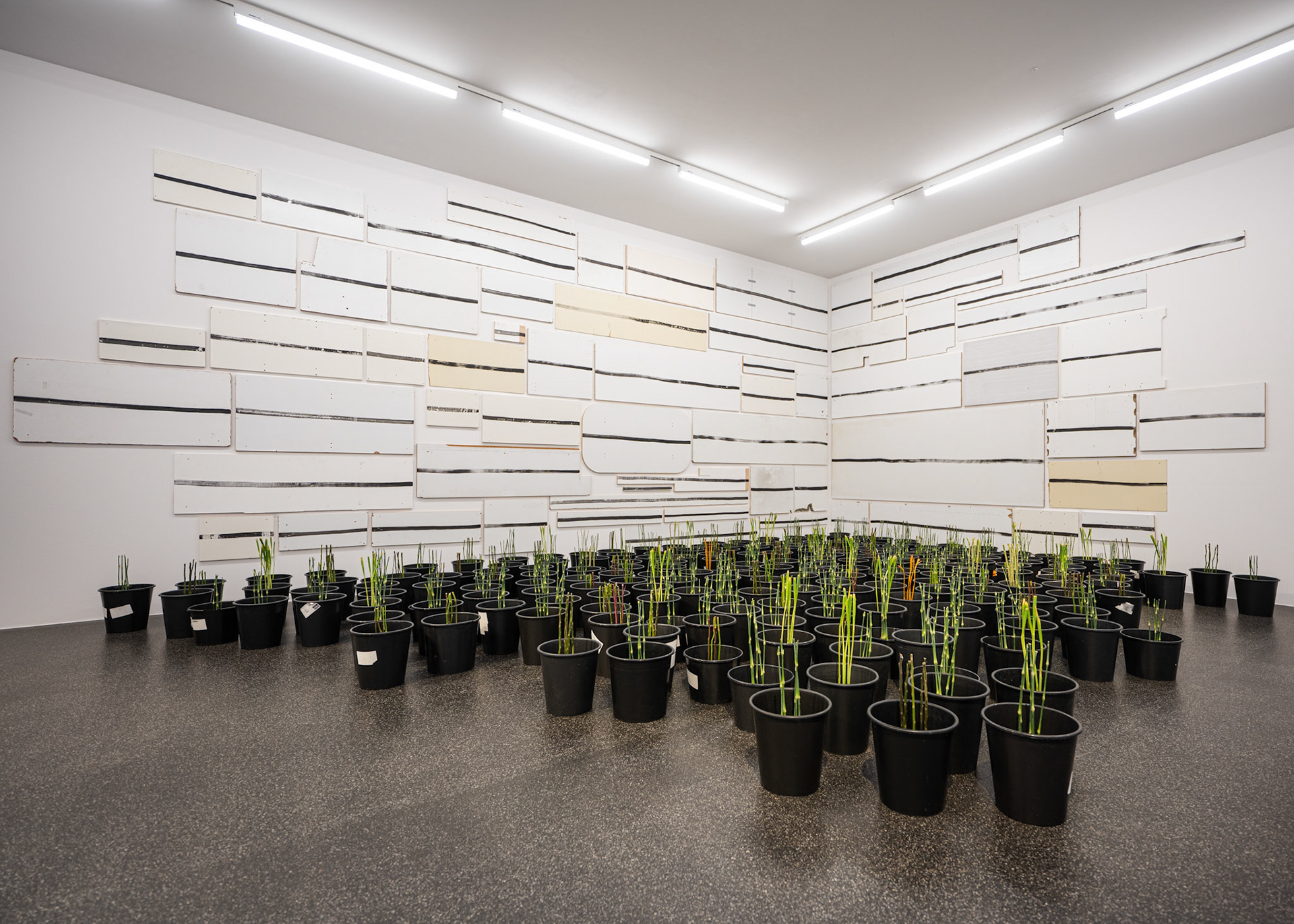
Silvia Bächli / Marie Bongard
Guido Nussbaum / Kathrin Muggli
Guido Nussbaum uses the motif of a microphone to create a conceptual self-portrait that questions the roles of the painter and the viewer. Kathrin Muggli incorporates a physical microphone into the room and surrounds it with woven willow forms. This creates a "resonance chamber" that translates the conceptual idea of voices and polyphony into a tangible floral ensemble, inviting visitors to imagine their own voices within the work.
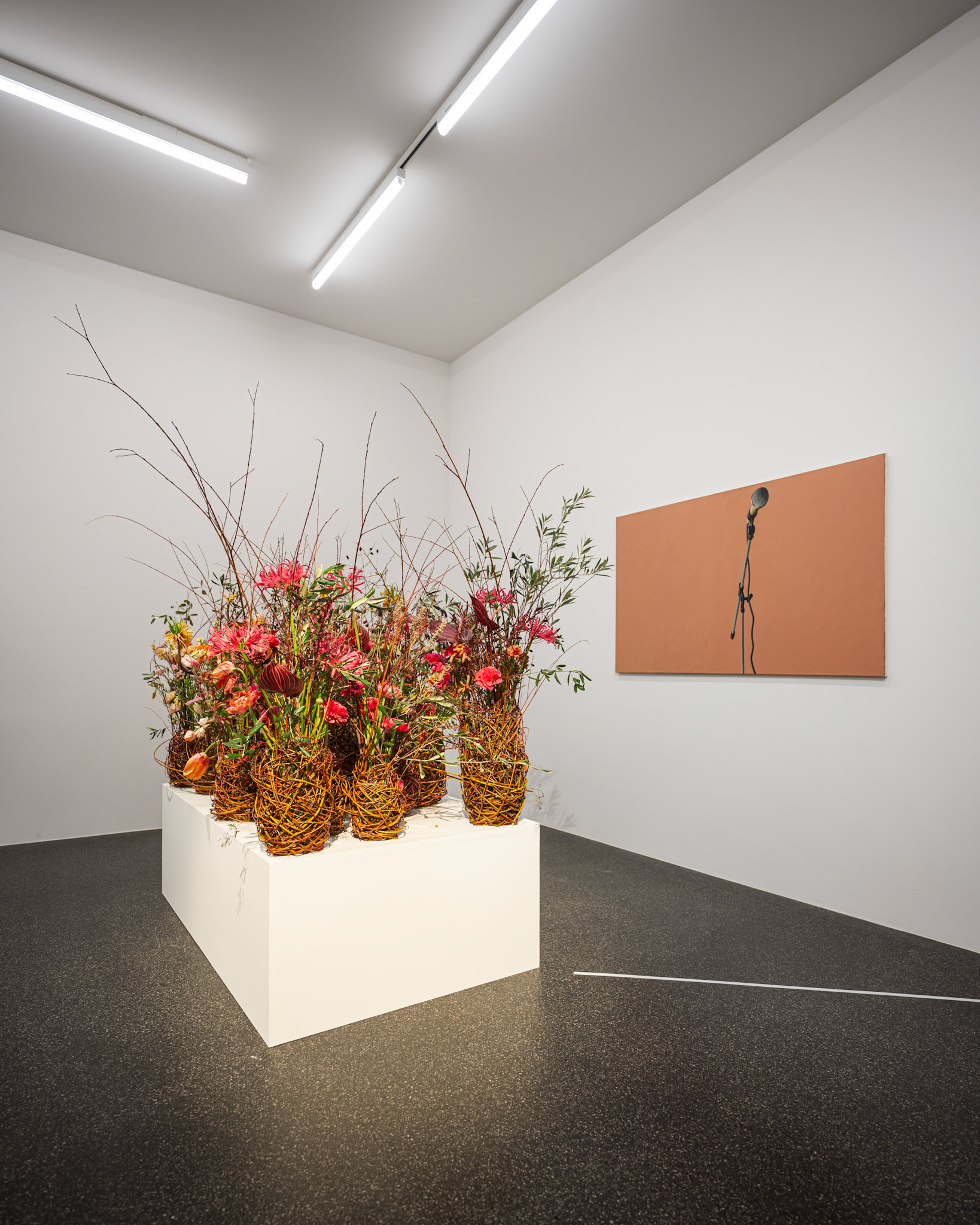
Guido Nussbaum / Kathrin Muggli
Gianfredo Camesi / Marianne De Tomasi
Gianfredo Camesi’s artwork "Organisme spatiale" (1965) features symbols and repetitive signs in curved lines that suggest the movement of matter in space. Marianne De Tomasi responds to these "spatial organisms" with an immersive arrangement of dark, rhythmic seasonal plants like cedar, hellebore, and fritillaria. Blue hyacinths and metallic copper containers are used to echo the painting’s color palette and cosmic atmosphere, creating a vibrant, near-monochrome structure.
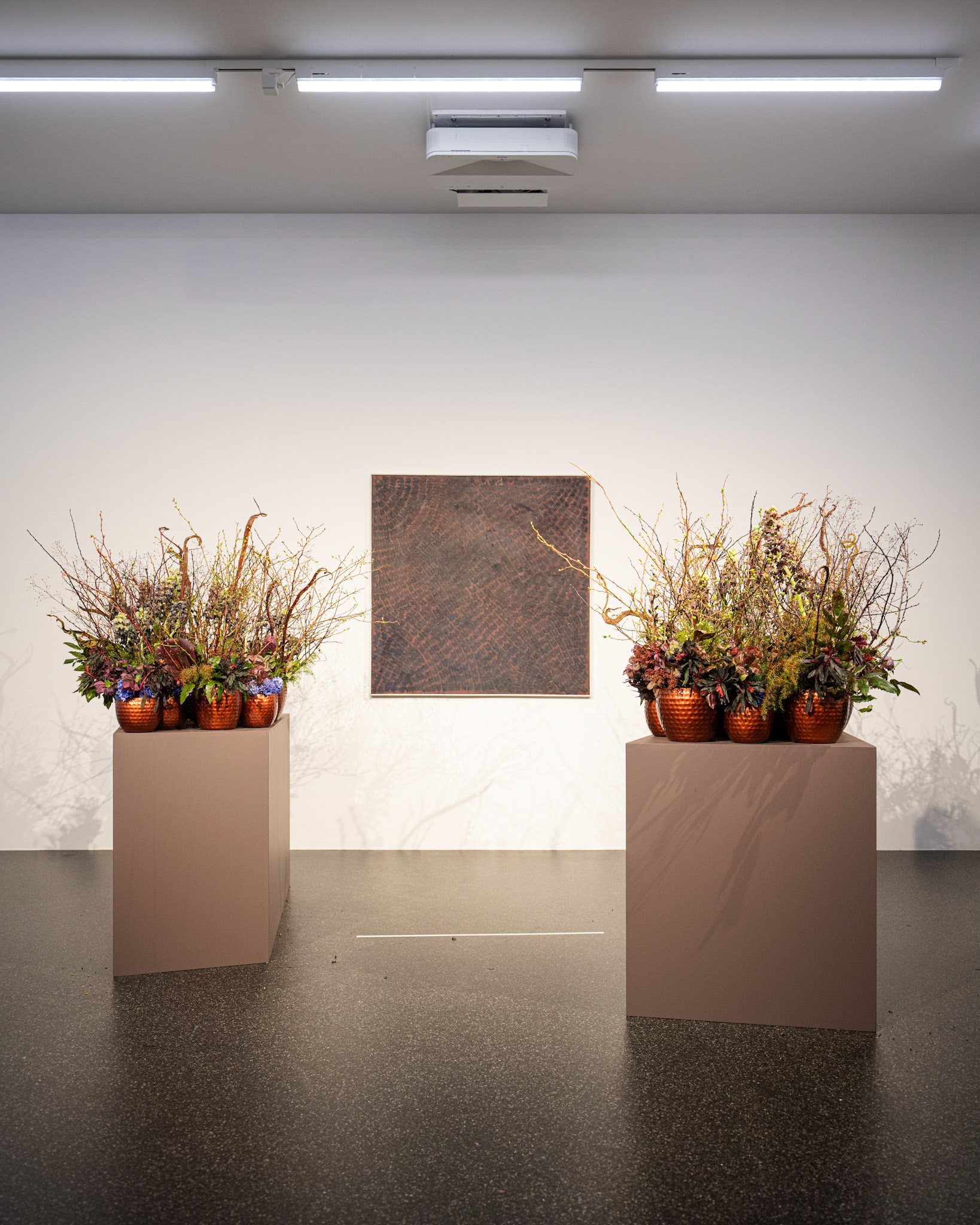
Gianfredo Camesi / Marianne De Tomasi
Christian Megert / Heidi Bisang and Andrea Lehmann
As a member of the ZERO group, Megert uses mirrors and fluorescent tubes to replace color with light and movement, creating infinite spatial depth. Heidi Bisang and Andrea Lehmann translate this kaleidoscope effect into a "floral mandala". By repeating elements like chrysanthemums and vanda orchids, they create a calm, contemplative experience that mirrors the repetitive visual dynamics and infinite reflections of Megert’s light box.
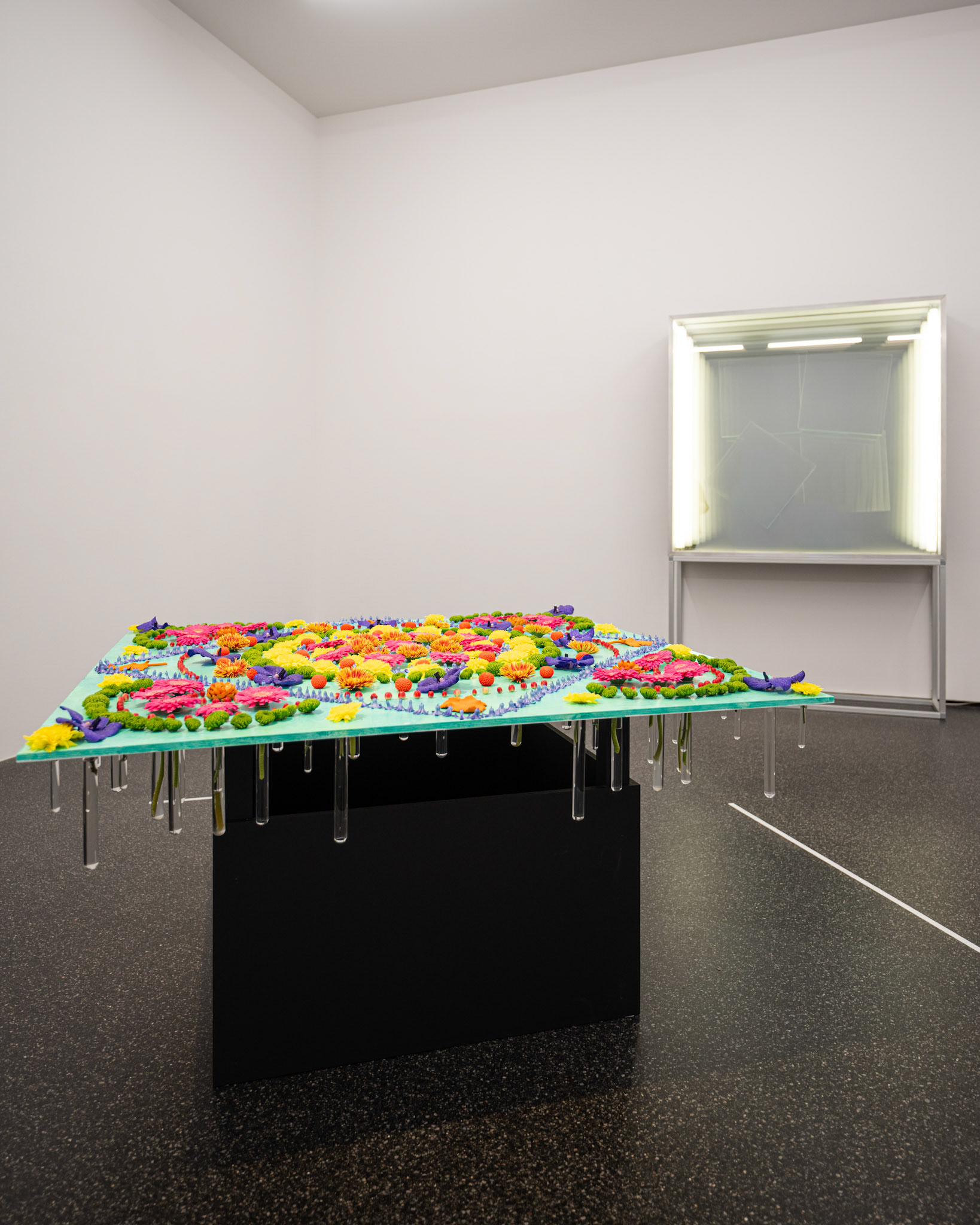
Christian Megert / Heidi Bisang and Andrea Lehmann
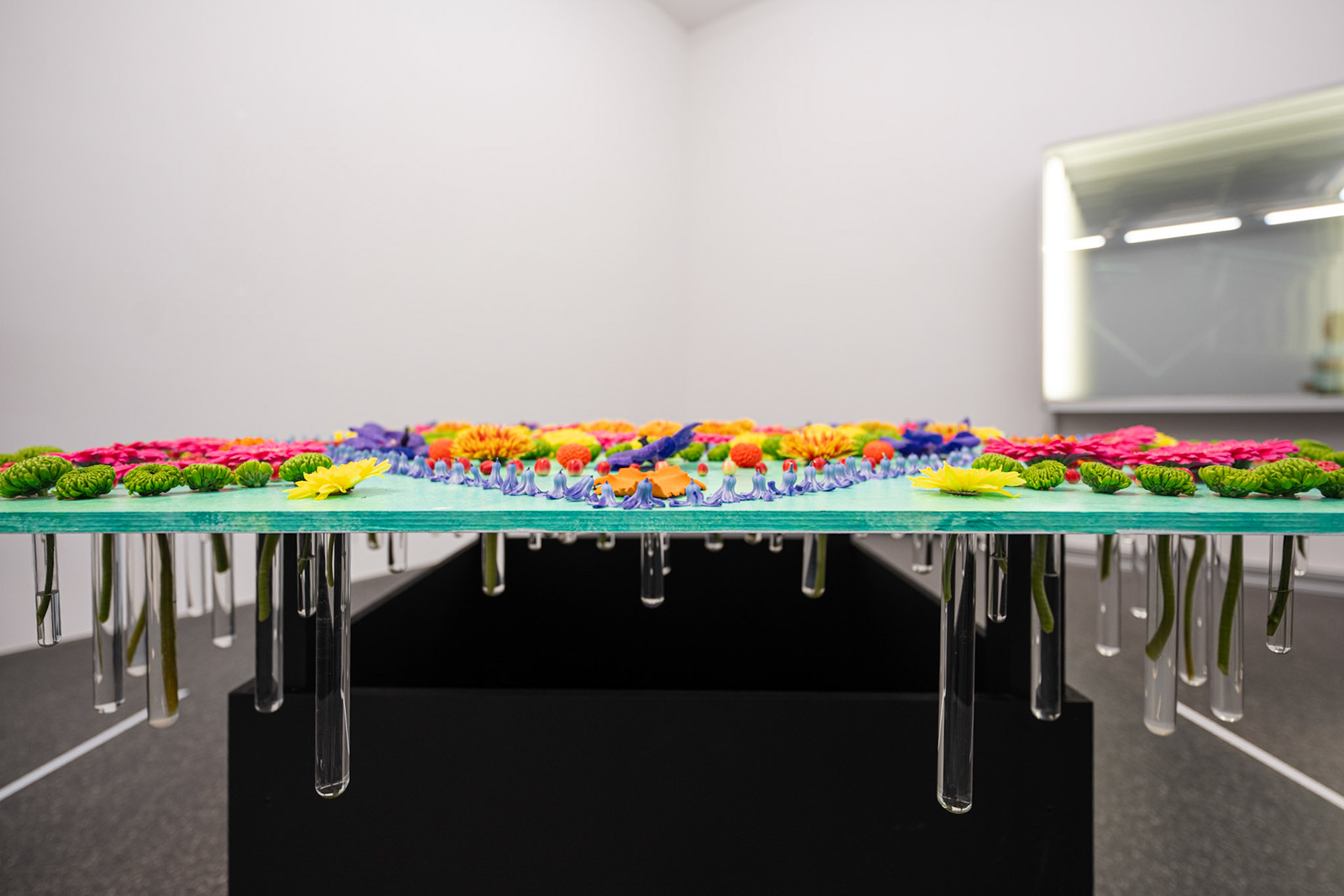
Christian Megert / Heidi Bisang and Andrea Lehmann
Jean Pfaff / Nicolaus Peters
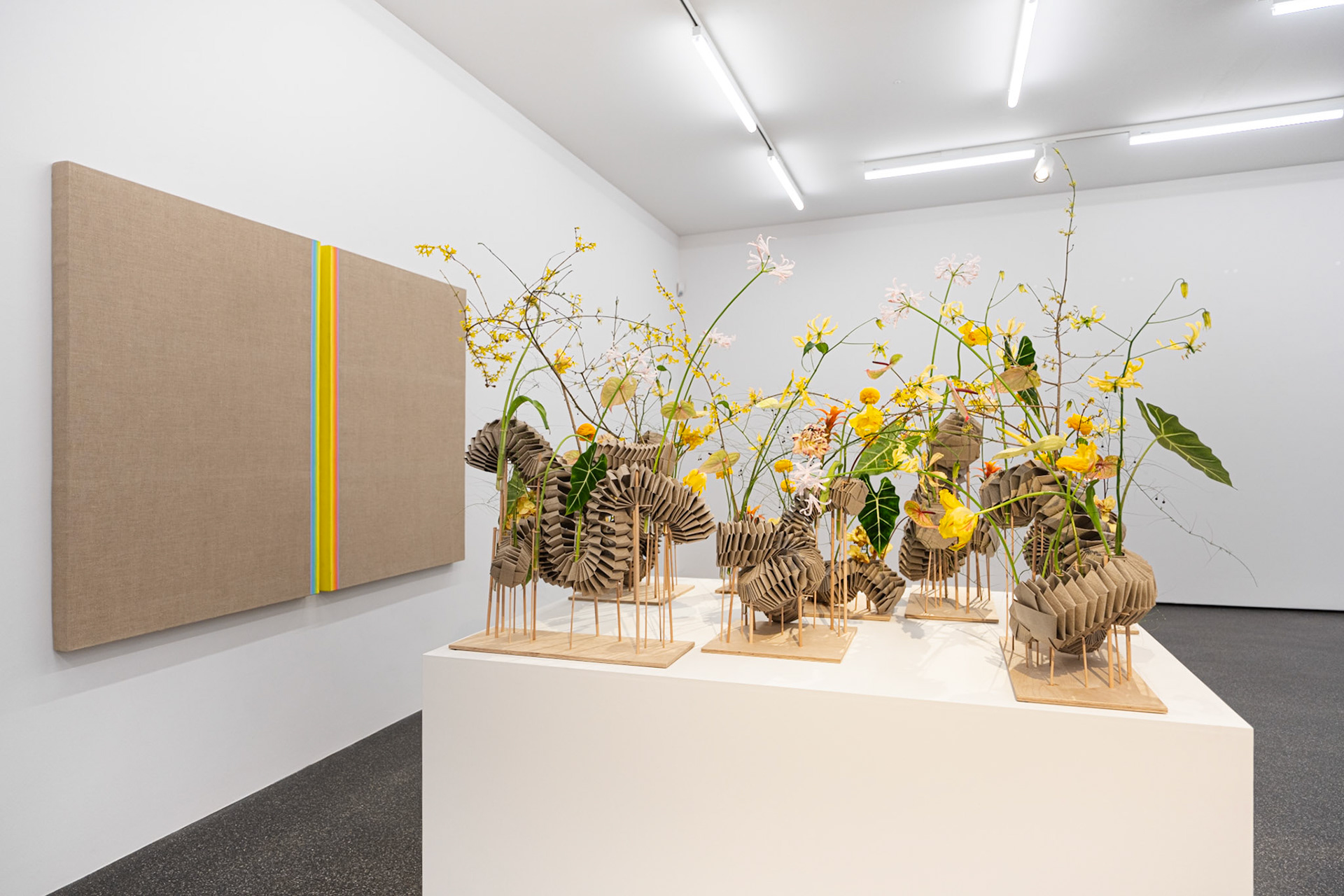
Jean Pfaff’s diptych explores color theory through fine acrylic bands of the spectrum applied to raw canvas, with a central split that the eye must bridge. Nicolaus Peters uses the Japanese Kirigami technique to transform flat surfaces into a 3D object. The floral arrangement reacts to the intensity of the yellow center and the vertical division of the painting, with flowers like anthuriums and ranunculus appearing to "hover" above the structure to accentuate the tension between separation and connection.